Ipieca’s industry leading good practice guidance and resources support oil, gas and alternative energy companies to advance their climate action, environmental responsibility, social performance and integrate sustainability across their operations and supply chains.
The filter below allows you to search for guidance and resources by theme, type, language and date as well as entering a search enquiry.

The theme of this Annual Review reflects the strategic intent introduced in Ipieca’s 2025-2028 Strategy, which aims to accelerate action underpinned by collaboration
and shared understanding across the UN, business, finance and civil society.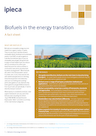
This fact sheet explores key aspects of biofuels and explains the role of biofuels in the energy transition, outlining the main biofuel types, feedstocks and production pathways, as well as where and how biofuels are used across transport and other sectors. It also describes how biofuel sustainability is assessed.

The annual Ipieca sustainability reporting survey identifies trends in the sustainability reporting practices of Ipieca member companies. These are the results for 2025.

SPE Gaia and SPE CCUS Technical Section, IOGP, OGCI and Ipieca, are hosting a webinar series sharing knowledge and good practice around the scaling up of CCS technology, including key issues, environmental responsibility, financial incentives, policy, and liability concerns.

This webinar offers a range of perspectives around permitting to development for CCS, including but not limited to, topics such as experiences in permitting, discussions around social acceptance, long-term liability, jurisdictional differences and lessons learned.
This second edition provides an updated overview of key concepts, definitions and priorities informing the just transition landscape.

The 'Plastic pellets clean-up field guide' provides practical, operational guidance to support safe and effective recovery following a marine or coastal plastic pellets incident.
A technical support document to accompany the Ipieca-IOGP guidance on surface and subsurface dispersant
Ipieca hosted a virtual webinar series on practical abatement technologies and case studies to help operators understand detection, quantification and reduction of methane emissions.

Responding to the continuous advancement of technology, Ipieca, IOGP, OGCI, and the Energy Institute have released an update of this guidance and online tool to help operators select and deploy methane detection and quantification technologies.
Title Type Theme Published Download 
2025 Annual Review Awareness brief Corporate 13 Apr 2026 
Biofuels in the energy transition Fact sheet Climate 10 Apr 2026 
Sustainability reporting survey: 2025 results Awareness brief Sustainability 24 Feb 2026 
Ipieca-SPE Gaia-SPE CCUS Technical Section-OGCI-IOGP Carbon capture and storage webinar series 2025/2026 Webinar Climate 18 Feb 2026 
Permitting to development for carbon capture and storage Webinar Climate 18 Feb 2026 
Just transition literature review Awareness brief People, Climate 18 Feb 2026 
Plastic pellets clean-up field guide Good practice guidance Marine spill preparedness and response 26 Jan 2026 
Dispersant storage, maintenance, transport and testing Good practice guidance Marine spill preparedness and response 22 Jan 2026 
Latin America regional webinar series on methane: insights report Webinar 06 Jan 2026 
Recommended practices for methane emissions detection and quantification technologies - upstream Good practice guidance Climate 19 Dec 2025