Ipieca and its members are committed to supporting the Paris Agreement and its aims.
The Ipieca Principles
The Ipieca Principles set a sustainability framework and reinforce Ipieca’s role to inspire action and lead the global oil, gas and alternative energy industry through a sustainable energy transition.
The first principle under each theme provides support for a United Nations convention or initiative. The second principle under each theme is operational.
The first two of the eight Ipieca Principles are:
Support the Paris Agreement and its aims
Advance emissions reduction and innovation and enable adoption of low-carbon products and solutions across oil, gas and/or alternative energy
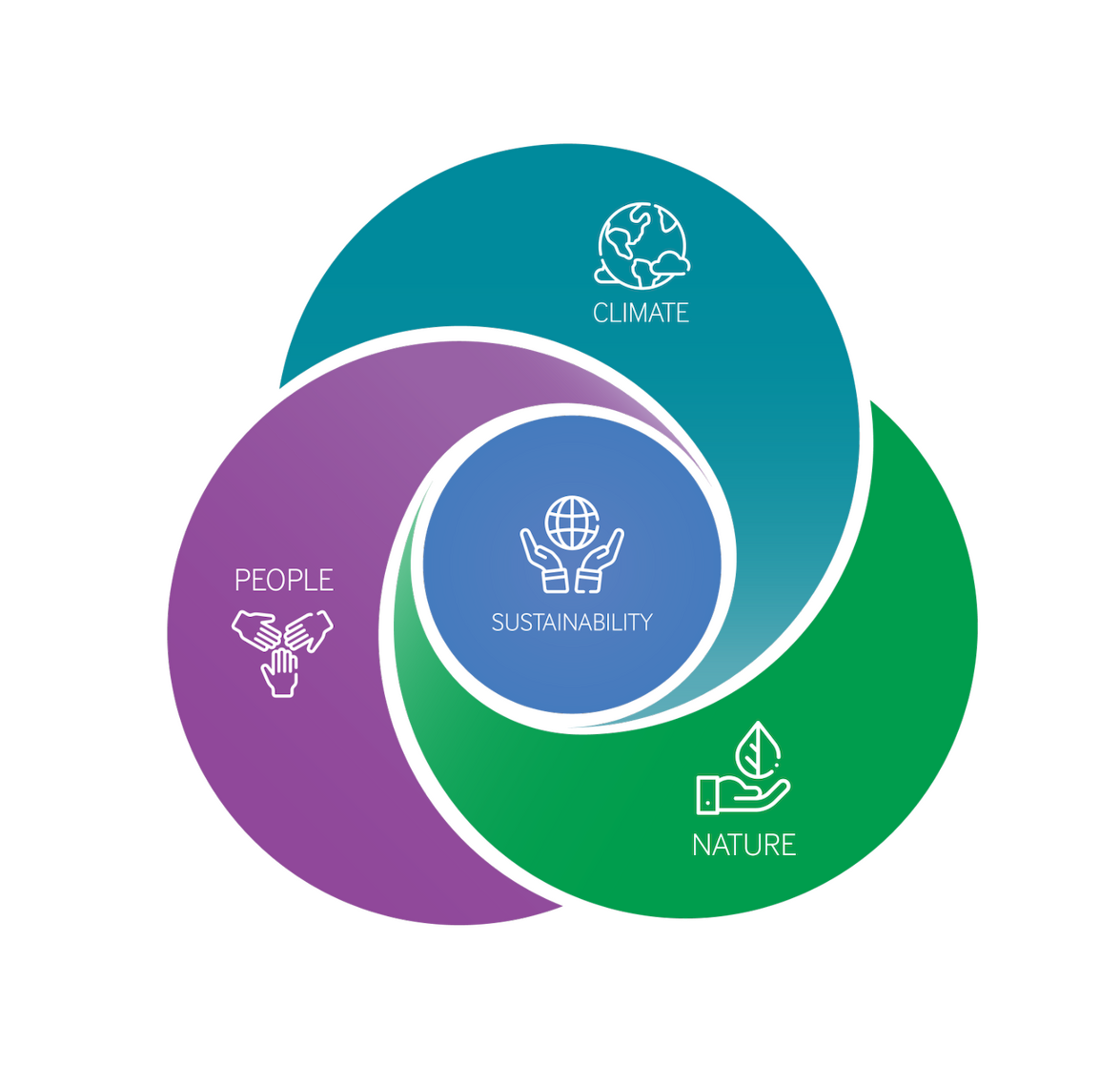
Our interconnected strategic pillars of climate, nature and people
Ipieca has a unique and important role to play in supporting a just energy transition. We bring our members together with stakeholders in the UN, NGOs, civil society, other sectors (including the hard-to-abate sectors), academia and financial institutions to work on the interconnected areas of climate, nature and people in a holistic way, enhancing our impact and supporting the delivery of a net-zero emissions future that cares for nature and leaves no one behind.
Ipieca works to address climate change
The Ipieca Climate Change Group was established in 1988. Since then, Ipieca has developed and shared good practice guidance and tools to reduce greenhouse gas (GHG) emissions, enhance energy efficiency, report on climate related risks and opportunities, and support the sustainable scale up of energy transition solutions.
Reducing operational emissions
Ipieca develops and shares practical guidance to reduce GHG emissions across the production, refining and transportation of oil and gas, supporting the industry to be part of a net-zero future by producing the energy the world needs responsibly and with less emissions.
Energy efficiency
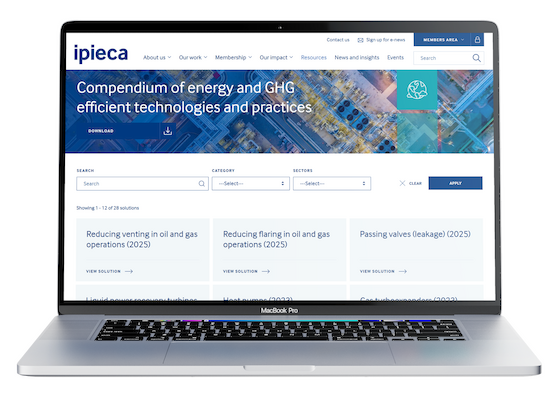
The most cost-effective method of reducing GHG emissions is to reduce energy consumed. The Ipieca-IOGP Compendium of energy and GHG efficient technologies and practices raises awareness and uptake of energy efficiency technologies and practices for use across the industry value chain.
Raising awareness and support for low-emissions pathways and initiatives
Ipieca supports its members and industry to understand technologies and practices which can support the delivery of the Paris Agreement goals, such as carbon capture and storage, hydrogen and carbon offsets, through producing awareness briefs, hosting multistakeholder workshops, organising peer-to-peer learning sessions and running webinars. Ipieca also supports the work of global multi-stakeholder initiatives and partnerships aimed at driving down emissions.
Net-zero emissions
Ipieca’s Net-zero Emissions Task Force shares knowledge and good practice. It also focuses on educating and informing stakeholders on different tools and pathways to achieve net-zero emissions.
Cleaner marine and aviation fuels and products
Ipieca is a founding member of the United Nations Environment Programme's (UNEP) Partnership for Clean Fuels and Vehicles (PCFV), which focuses on air quality improvements through improved vehicle emissions standards and associated lower-sulphur fuels. Through the partnership, Ipieca contributed to the global end of leaded petrol. UNEP is currently working on the global roll out of Euro 4 fuel standards.
Ipieca has been a long-standing observer of the International Maritime Organization (IMO) since 1995 and partners with the IMO on a range on initiatives to support its analysis of life cycle GHG emissions of shipping fuels and the development of lower-carbon shipping fuels, for example, partnering on the IMO Future Fuels and Technology Project. We also work with a wide range of associations and stakeholders to identify ways to make cleaner marine fuels more readily available to ship owners around the world. Ipieca also provided technical input to the IMO Net-Zero Framework.
Ipieca has observer status with the International Civil Aviation Organization (ICAO). Our role is to provide the ICAO with technical input on life cycle analysis of aviation fuels, considering Ipieca’s expertise around processing, as well as analysing other sustainability criteria, including human rights, biodiversity, resource availability and supply chain issues related to their development.
Supporting the sustainable scale up of alternative energy
The scale up of alternative energies such as solar, wind and biofuels, necessary if we are to meet the goals of the Paris Agreement, needs to take into account climate, environmental and social risks associated with their development and use.
All Ipieca guidance and tools support oil, gas and alternative energy projects, with some guidance developed specifically for renewables.
Nature-based solutions
Nature-based solutions (NbS) are one of the mitigation strategies for climate change and one of the key enablers of the energy transition, providing simultaneous benefits to human well-being and biodiversity.
Ipieca leverages members’ expertise and collaborates with external stakeholders to enhance the sustainable scale up of NbS. Ipieca is uniquely positioned to explore the cross-cutting environmental and social aspects of NbS and enable companies to address local and global risks and opportunities associated with climate change.
Data and reporting
The collection of accurate and transparent data on carbon dioxide and methane emissions is essential to driving emissions reductions. We provide guidance on how to measure and report on GHG emissions, including Scope 3, as well as climate governance, lower-carbon technology, energy use and flared gas.
Adaptation and resilience
In the energy industry, climate change adaptation and resilience are essential for companies to manage the impacts of climate change on operations and assets. This includes adapting to changes such as extreme weather and rising sea levels, as well as building resilience in supply chains and portfolios. Ipieca supports its members and the wider industry to understand and address different aspects of adaptation and resilience including physical risks of climate change, disclosure requirements, biodiversity and ecosystem services, water, and communities.
Paris+10 timeline
Find out how Ipieca has supported the Paris Agreement on the journey from COP21 to COP30.