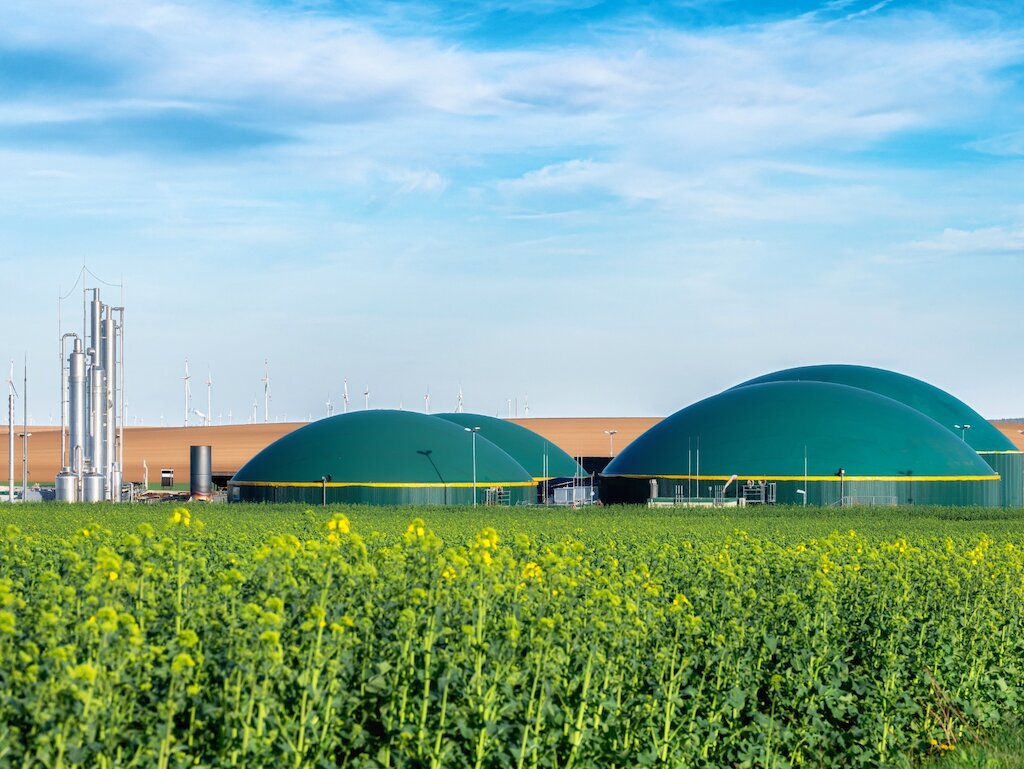
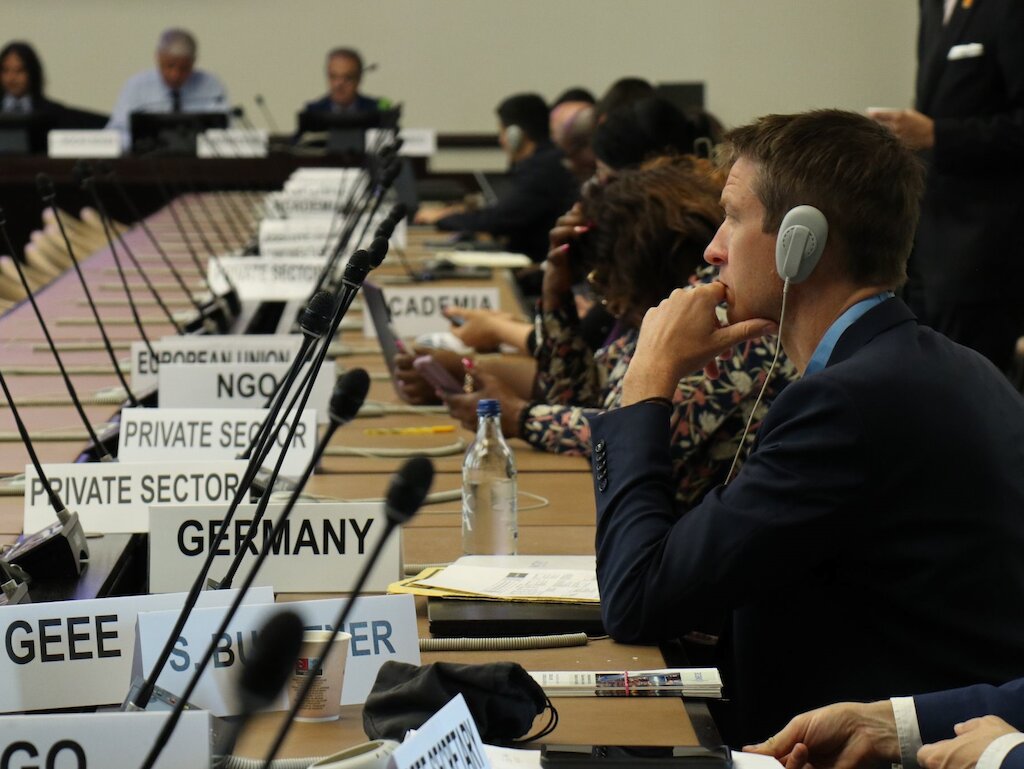
The week featured discussions on renewable energy, energy efficiency, cleaner electricity systems, resilient energy infrastructure, energy financing and the role of sustainable fuels in supporting the energy transition. Participants highlighted the importance of integrated approaches that strengthen energy security, affordability and sustainability while accelerating progress towards climate goals.
7 October 2026
Ipieca attended the UN Economic Commission for Europe (UNECE) Sustainable Energy Week 2026 in Geneva, which brought together governments, international organisations, industry, academia and civil society to discuss pathways towards secure, affordable and sustainable energy systems.
Ipieca participation
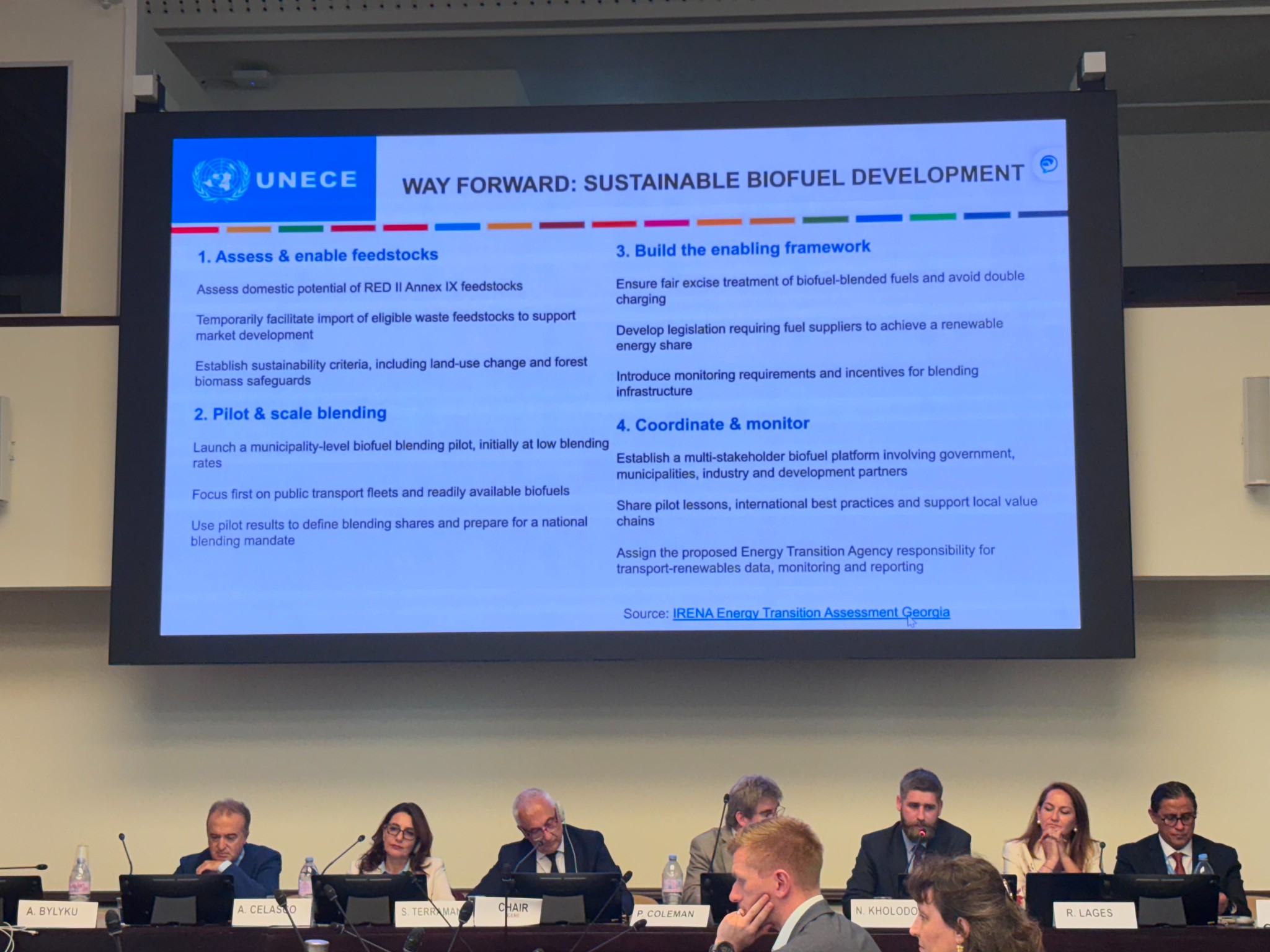
Alongside the plenary sessions, Ipieca participated in the 13th session of the UNECE Group of Experts on Renewable Energy (GERE 13), including discussions on biofuel quality and sustainability standards, the exchange of experiences to increase renewable energy uptake. Ipieca also attended the IUCN-UNECE Workshop on Biofuel Sustainability, which explored opportunities to scale sustainable biofuels while strengthening biodiversity protection, social safeguards and international cooperation.
Key takeaways from GERE 13
A dedicated session on tracking progress in renewable energy uptake focused on the growing role of biofuels and the opportunities and challenges associated with their further development. Discussions highlighted the significant potential of biofuels as locally sourced, low-emission energy carriers that can complement other renewable energy technologies and contribute to more resilient energy systems.
Participants emphasised the importance of internationally compatible sustainability criteria, certification systems and life-cycle assessment methodologies to ensure biofuel deployment contributes effectively to climate objectives and sustainable development. Greater harmonisation of biofuel quality and sustainability standards was seen as a priority for supporting market growth, reducing trade barriers and improving confidence across value chains.
The session also highlighted the need for stronger regional and international cooperation to address challenges such as fragmented regulations, permitting delays, certification complexity and supply chain constraints. Participants welcomed ongoing collaboration between UNECE and IUCN to help integrate nature-positive principles into biofuel strategies and support broader sustainability objectives.
More broadly, discussions reinforced the role of knowledge-sharing platforms, capacity building and technical cooperation in helping countries accelerate renewable energy deployment and strengthen institutional capabilities.
Key takeaways from the IUCN-UNECE Workshop on Biofuel Sustainability
The IUCN-UNECE Biofuels Workshop brought together representatives from international organisations, governments, industry, academia and civil society to discuss how sustainable biofuels can support the energy transition while delivering environmental and social benefits. Discussions focused on opportunities to increase sustainable biofuel deployment, barriers to market growth, certification systems, biodiversity safeguards and international cooperation.
Key themes from the workshop included:
Sustainability beyond greenhouse gas emissions
- The need to assess biodiversity, land use, water resources and social impacts alongside life-cycle greenhouse gas emissions
- Recognition that sustainable biofuel value chains can support ecosystem restoration, biodiversity conservation and rural development when supported by appropriate safeguards
- Growing interest in frameworks that capture the broader environmental, social and economic impacts of sustainable fuels
Certification and standards
- Broad agreement that certification and sustainability standards are critical to building trust and supporting market growth
- Concerns that fragmented certification systems can increase costs, create trade barriers and slow deployment
- Support for greater harmonization and mutual recognition of certification schemes to improve market access and reduce complexity
Biodiversity and nature-positive development
- Discussions highlighted the importance of integrating biodiversity protection into biofuel strategies from the outset
- Presentations demonstrated that biofuel production can deliver positive outcomes for soil health, ecosystem restoration and nature conservation when implemented responsibly
- Participants emphasised that biodiversity impacts are highly context-specific and depend on feedstock choices, land-use history and local conditions
International cooperation and knowledge sharing
- Speakers highlighted the value of collaboration between governments, international organisations, industry and civil society
- The role of initiatives such as the Belém Pledge was discussed as a means of accelerating sustainable fuel deployment globally
- Participants noted the need for continued exchange of best practices, scientific evidence and practical experience to support informed decision-making
The workshop concluded that biofuels can play an important role in the broader energy transition, but continued progress will depend on transparent sustainability frameworks, stronger international cooperation, science-based decision-making and ongoing dialogue between stakeholders. Participants also agreed on the importance of further collaboration on certification systems, life-cycle assessment methodologies and sustainability criteria to support the responsible scale-up of sustainable biofuels.
Ipieca is looking forward to continuing engagement with UNECE, and contributing to the next Sustainable Energy Week. Read more about Ipieca’s work on climate here.
Click here for more information, presentations and documents from UNECE Sustainable Energy Week 2026.