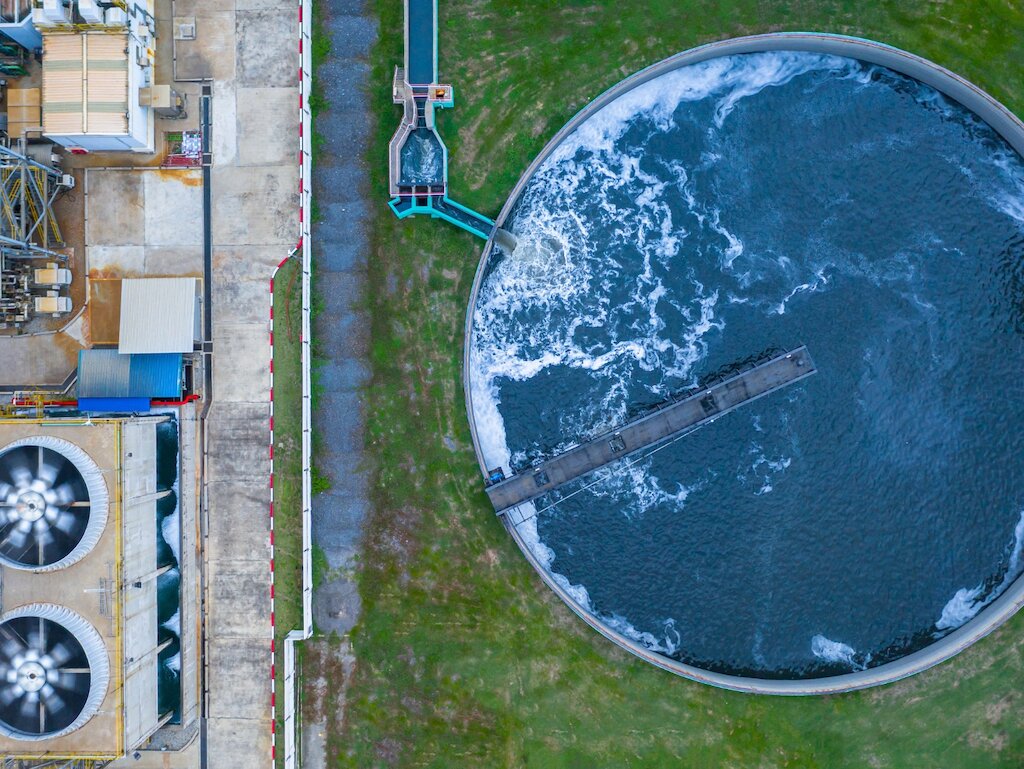
The year 2030 is a pivotal milestone for the Kunming-Montreal Global Biodiversity Framework (GBF), serving as the ambition for achieving its action targets. It also represents the point by which the world aims to halt biodiversity loss and set a clear trajectory toward full recovery by 2050.
27 May 2026
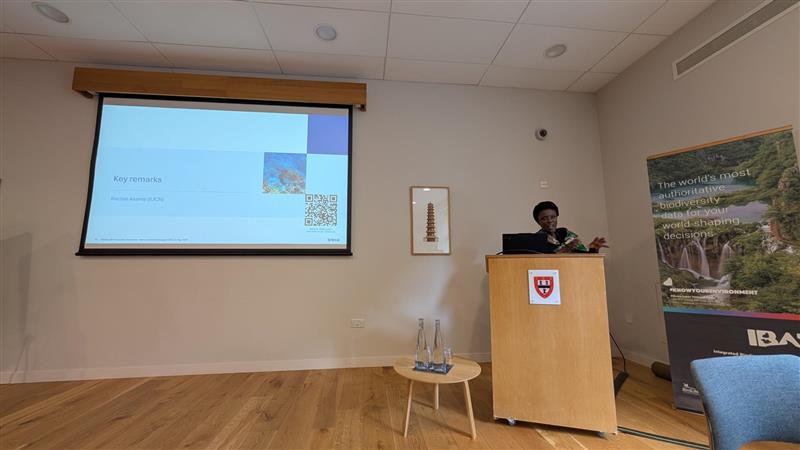
Leaders from business, finance and the conservation community gathered in Cambridge, the UK, for the Nature Action Dialogues, co-hosted by UNEP-WCMC, Proteus Partners and Jesus College Cambridge. This year's theme was 'Countdown to 2030: aligning ambition, scaling integrated action’.
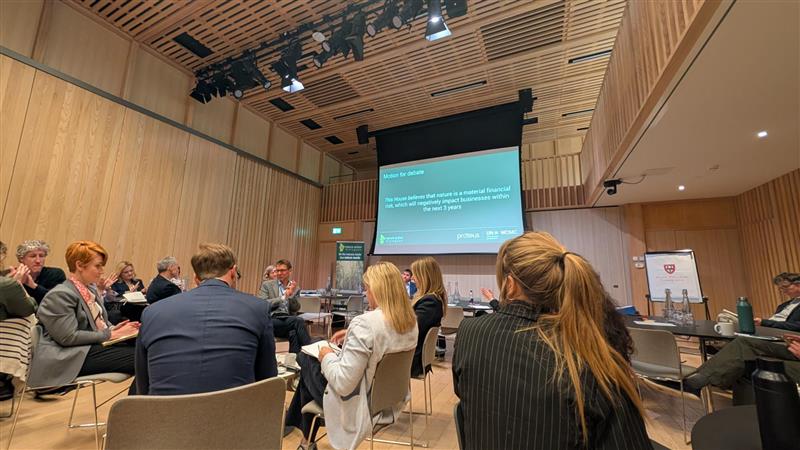


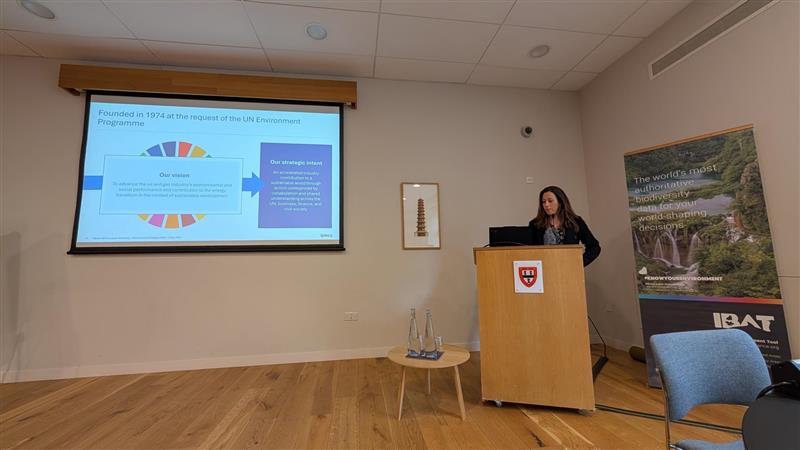
Insights from NAD 2026
Across the event, several key insights emerged:
Bridging the gaps between ambition and implementation in businesses to scale positive impacts to nature
Key gaps in business operations discussed included:
- Different parts of organisations (e.g. corporate vs site-level teams) often use different language and metrics, and issues that are material to specific site(s) may not be material at corporate level for an organisation with multiple sites globally
- The availability of data does not necessarily translate into actionable insights. There is a need to simplify and align tools to support practical decision-making
- Organisational silos, and a lack of integrated, systems-based thinking across climate, biodiversity, and social topics
- Nature considerations across supply chains and procurement functions
These gaps reflect a broader transition underway, where organisations are moving from conceptual frameworks towards practical implementation. However, this transition remains complex, with uncertainties and evolving expectations sometimes slowing progress.
Transition from frameworks to implementation requires:
- Connecting board-level decisions with operational realities across sites and projects
- Tailoring approaches and data use to sector- and location-specific contexts
- Strengthening cross-functional alignment internally and encourage knowledge sharing between functions
- Mainstream sustainability thinking with procurement and suppliers
Building trust for business action on nature
Trust is a key enabler of credible nature action, with increasing scrutiny on corporate commitments and stronger expectations for transparency, consistency and alignment between strategy, operations and supply chains.
Businesses are encouraged to:
- Communicate clearly on progress, challenges and trade-offs
- Share practical experience and learnings
- Consistently apply frameworks and standards
- Align across internal functions and supply chains
- Collaborate across sectors to define and demonstrate credible action
Nature as a financial risk and opportunity
Discussions highlighted a growing interest in translating nature into financial language, particularly in terms of risks and opportunities. There is also a shift towards recognising nature-related risks as financially material, including physical risks linked to ecosystem degradation and transition risks associated with policy, regulation and market changes.
However, participants noted that nature-related risks are often:
- Difficult to quantify consistently
- Highly location- and sector-specific
- Not always enforceable or reflected in market signals
At the same time, there is increasing focus on opportunities linked to nature, including operational efficiencies, resilience and new investment pathways.
Finance was recognised as a key enabler of the nature transition. Aligning financial flows with biodiversity goals remains a critical challenge, requiring improved risk and opportunity assessment and stronger engagement between finance, businesses, the civil society (including NGOs) to develop innovative and robust financing mechanisms and investments at scale.
For example, agribusinesses are increasingly exposed to pest outbreaks, soil degradation, water stress and shifts in pollinators—driving reduced access to certified products, higher operational costs and growing financial risks across food supply chains.
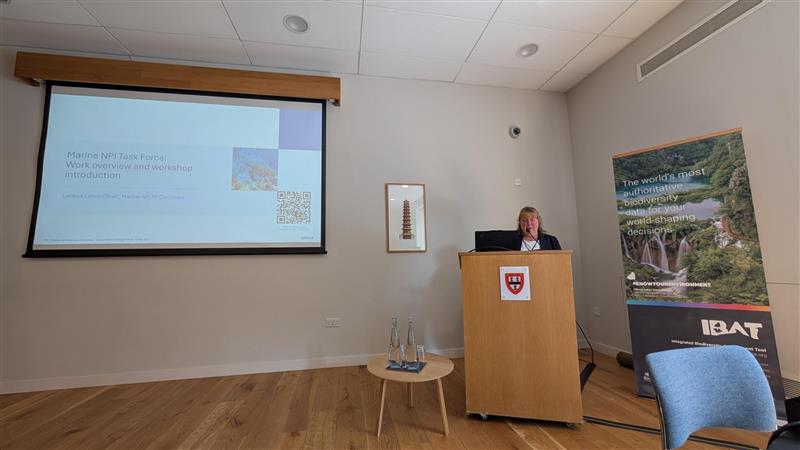
Ipieca-IUCN marine net positive impact (NPI) for the energy industry session
Ipieca together with IUCN co-hosted a session on marine NPI for the energy industry, bringing together 35 participants, including Ipieca members and a broad range of external stakeholders. The session provided an opportunity to raise awareness of the Marine NPI principles being drafted by Ipieca and IUCN, while actively seeking feedback to strengthen their relevance and applicability. Through discussions, participants shared practical experience of delivering marine NPI, helping to ground the principles in operational reality.
Key insights include:
- Opportunities and challenges in implementing marine NPI, including the need to better understand barriers and enablers to uptake across different contexts
- The importance of additional supporting guidance, tools and case studies to facilitate implementation
- The value of continued collaboration between industry and stakeholders to ensure robust, practical and capable of supporting action at both project and seascape scales
Based on the feedback received during the NAD and subsequent consultations with stakeholders, Ipieca and IUCN will refine the principles.
Looking ahead
The NAD demonstrated growing momentum across business, finance and the conservation community to address nature-related risks and opportunities. At the same time, the event highlighted the complexity of the transition and the need for continued collaboration.
For Ipieca members, the insights reinforce the importance of:
- Embedding nature into core business strategy and governance
- Strengthening supply chain engagement
- Building trust
- System level thinking across climate, nature and social topics
- Aligning the language used to communicate on nature across business and financial sectors
- Collaborating across sectors to scale impact
As the timeline to 2030 shortens, the focus is increasingly on accelerating integrated, practical action, turning ambition into outcomes that deliver for nature, climate and society.

This report presents a comprehensive synthesis of current concepts and methodologies for addressing the challenges of defining, implementing and measuring marine net positive impact (NPI).
This report evaluates existing circular economy measurement frameworks and identifies how a combination of frameworks enables better measurement of circular economy by oil and gas companies.
This document provides examples of how Ipieca companies are taking ambitious biodiversity actions which contribute towards the goals of the Global Biodiversity Framework.