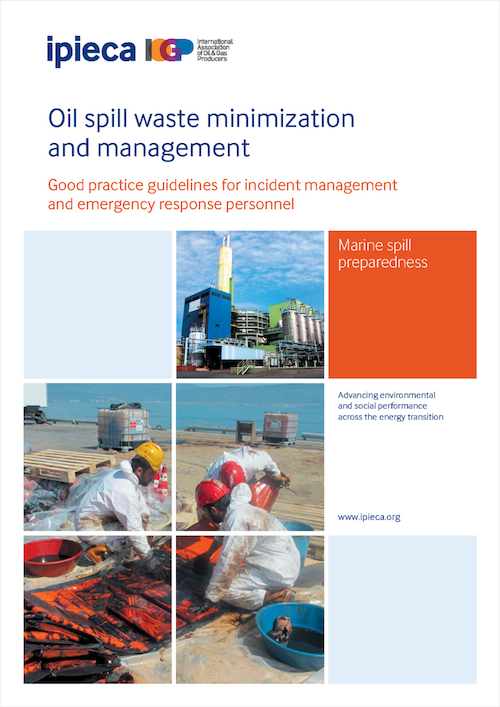
Oil spill waste minimization and management good practice guidelines
8 December 2025
This document introduces the principles of oil spill waste management, emphasising the need to incorporate a waste management plan as part of the oil spill contingency planning process.
Effective oil spill waste management is a significant aspect of a response in terms of both operational impact and environmental and financial burdens, both in the short- and long- term.
The guide outlines good practice for minimising and managing waste during oil spill responses. It covers the principles of waste management including planning, collection, treatment and disposal of oiled waste. The document includes case studies from real incidents, practical advice for developing waste management plans, and strategies to reduce environmental and financial impacts. The guidance aims to support efficient, compliant and environmentally considerate waste handling during oil spill responses.
What does it cover?
Introduction
General waste management considerations
Waste management strategy
Waste management planning
Waste collection, storage and transport
Waste segregation, treatment and final disposal
Conclusion
Who is it for?
This guidance helps incident management personnel and contingency planners. Particularly those responsible for environmental and waste management within a response.
Oil waste minimization and management good practice, is part of the update to the Ipieca-IOGP publication series, which summarises current views on good practice for oil spill preparedness and response topics.
This document aims to help operators navigate the steps involved in implementing and maintaining a surveillance programme during a response to an oil spill.
Launch of 'Oil spill monitoring and sampling' technical support document
20 November 2020
This technical support document helps operators navigate the steps and good practices involved in planning for, and implementing, a monitoring and sampling programme.