
• Home
  • Resources
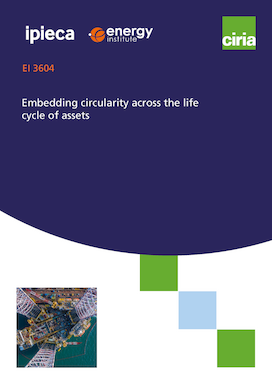
  • Embedding circularity across the life cycle of assets
Calendar13 July 2026
In collaboration with:
  • Energy Institute logo
  • CIRIA logo

This report helps companies integrate circular economy principles into every stage of an asset’s life cycle. It provides practical guidance, tools and examples to support the transition from linear approaches to more circular, resource-efficient ways of designing, building, operating and decommissioning assets.

  • What is covered by the report?
    Chevron-down

    The report provides a practical framework for incorporating circularity throughout the life cycle of energy and other infrastructure assets. It explains the business case for circularity, outlines key barriers and enablers, and provides actions that organisations can take at different stages of asset development and management. The guidance is supported by real-world case studies and references to relevant standards, policies and tools.

    The report includes:

    • Section 1: introduction
    • Section 2: how to define circularity and the reasons for embedding it
    • Section 3: barriers and enablers to embedding circularity
    • Section 4: how to embed circularity at each life cycle stage of an asset:
      • Need
      • Optioneering
      • Design and planning
      • Delivery
      • Operation
      • Decommissioning
    • Section 5: case studies illustrating practical applications of circularity
    • Annexes, including policy and regulatory context, key drivers, barriers and enablers to embedding circularity, metrics and KPIs, standards, guidance resources and other supporting information
  • Why is this important for energy companies?
    Chevron-down

    By embedding circularity across asset life cycles, companies can:

    • Improve resource efficiency and reduce waste
    • Maximise the value of materials and assets
    • Reduce environmental impacts and support net-zero ambitions
    • Strengthen supply chain resilience
    • Improve compliance with emerging policy and regulatory requirements
    • Support long-term business resilience and sustainability performance
  • Who is this report for?
    Chevron-down

    The guidance is primarily intended for:

    • Asset owners and operators
    • Project managers
    • Engineers and designers
    • Procurement and supply chain professionals
    • Contractors and service providers
    • Product and material suppliers

    It will also be valuable for anyone involved in the planning, delivery, operation or decommissioning of assets who is seeking to incorporate circular economy practices into decision-making.

E-mail alerts

Sign up to receive Ipieca's e-news
Climate
Nature
People
Sustainability
Marine spill
Please confirm that you are happy to receive newsletters from Ipieca: