Ipieca’s industry leading good practice guidance and resources support oil, gas and alternative energy companies to advance their climate action, environmental responsibility, social performance and integrate sustainability across their operations and supply chains.
The filter below allows you to search for guidance and resources by theme, type, language and date as well as entering a search enquiry.
This report from Ipieca-Energy Institute-CIRIA helps companies integrate circular economy principles into every stage of an asset’s life cycle. It provides practical guidance, tools and examples to support the transition from linear approaches to more circular, resource-efficient ways of designing, building, operating and decommissioning assets.

The 'Plastic pellets clean-up field guide' provides practical, operational guidance to support safe and effective recovery following a marine or coastal plastic pellets incident.
A technical support document to accompany the Ipieca-IOGP guidance on surface and subsurface dispersant

Responding to the continuous advancement of technology, Ipieca, IOGP, OGCI, and the Energy Institute have released an update of this guidance and online tool to help operators select and deploy methane detection and quantification technologies.
This document introduces the principles of oil spill waste management, emphasising the need to incorporate a waste management plan as part of the oil spill contingency planning process.
This Ipieca-IOGP report provides guidelines and practical information to control adverse health effects from working in extreme climates.

This compendium from Ipieca and the International Union for Conservation of Nature (IUCN) explores co-use opportunities that optimise land use and infrastructure by combining renewable energy production with other productive activities such as agriculture or nature-based activities.

This updated edition reflects five years of industry experience and technical advancements.
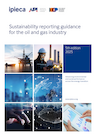
A framework to help companies shape the structure and content of their sustainability reporting, including for companies starting to report.
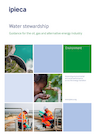
This guidance clarifies currently used terminology in the water stewardship space and presents users with a streamlined water stewardship action scheme that synthesises water frameworks and disclosure standards for the energy sector.
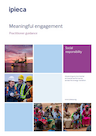
Undertaking ‘meaningful engagement’ not only enables companies to meet regulatory guidelines and international standards, but also build robust, constructive and reciprocal relationships with stakeholders.
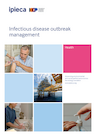
The oil and gas industry operates in many locations where people work, and often live together, in close quarters, such as offshore installations, ships, and remote camps. In these types of locations, infectious diseases can spread rapidly, affect workers, and disrupt operations. This guidance has been developed for local management and operations personnel working in these locations.
This recommended practice identifies key drug and alcohol programme elements and is intended for use by contractor companies and oil and gas industry owners and operators.

The increasing global movement of people and goods elevates the risk of the introduction, spread, and establishment of invasive alien species (IAS), impacting biodiversity and businesses. This document provides guidance for prevention and management.
The Readiness Evaluation Tool for Oil Spills (RETOS™) aims to assist governments and companies in assessing their level of oil spill response planning and readiness management.
Oil and gas operations take place in many countries where the quality of medical services and specialities differs. It is therefore important for a company to assess local health facilities to ensure that they can provide optimal medical care for their workers.
This industry-specific document provides guidance on the prevention of food- and water-related diseases.
An Incident Management System (IMS) is essential to optimizing response times and efficiency, providing clarity in command and control, improving resource coordination and communications, and facilitating the cooperation and integration of responding organizations.
This document is aimed at those persons responsible for ensuring that oil spill contingency plans are practised and verified, providing guidance on constructing an exercise programme that is suitable for meeting an organization’s or facility’s requirements.
This document identifies the principal health and safety issues when an oil spill occurs, their degree of severity and the practical steps to minimize the impact of the spill.
Indicators for the health performance of the industry are a necessary part of effective health management and the promotion of improvements in health performance.

Twelve e-learning modules to support the industry and its supply chain to improve awareness and management of labour rights issues.
This Ipieca-IOGP guidance is designed to help HSE/SD professionals to develop biodiversity action plans (BAPs) for their activities and projects.
The objective of this guidance is to provide a structured framework to guide practitioners, towards the implementation of an effective and efficient local content measurement and reporting process. It offers a roadmap to select, collect, and analyze metrics.
Guidance to support practitioners in developing robust social baselines for offshore project impacts to fisheries.

This document provides guidance for business leaders, HSE professionals, and health practitioners on the business case for outcome-focused and cost-effective medical emergency response (MER) and primary healthcare in the energy industries.
The Ipieca-OGCI Natural climate solutions: high carbon stock ecosystems management guidance supports the Paris Agreement goals by setting out the key principles to help energy companies conserve, enhance and restore the high carbon stock ecosystems where they operate.
A summary of the Ipieca-OGCI guidance on natural climate solutions management.
This guidance considers the effects of oil releases on fisheries, tourism and other commercial activities, and outlines available compensation schemes.

This document provides occupational health, HSE and occupational hygiene practitioners in the energy industries with pragmatic advice on how workplace lighting can limit circadian disruption and enhance health, safety, and performance.

This report presents recommendations for optimal health risk assessment and management within a health, safety, and environment management programme.

The Ipieca-IOGP-GGFR Flaring management guidance outlines new developments in flaring management and reduction, and examines industry experiences with eliminating flaring, new technologies, business models, operational improvements and regulatory policy.
Title Type Theme Published Download 
Embedding circularity across the life cycle of assets Good practice guidance Nature 13 Jul 2026 
Plastic pellets clean-up field guide Good practice guidance Marine spill preparedness and response 26 Jan 2026 
Dispersant storage, maintenance, transport and testing Good practice guidance Marine spill preparedness and response 22 Jan 2026 
Recommended practices for methane emissions detection and quantification technologies - upstream Good practice guidance Climate 19 Dec 2025 
Oil spill waste minimization and management Good practice guidance Marine spill preparedness and response 04 Dec 2025 
Health aspects of work in extreme climates Good practice guidance People 27 Nov 2025 
Co-use opportunities in wind and solar energy projects Good practice guidance Sustainability 08 Oct 2025 
Source control emergency response planning guide for subsea wells Good practice guidance Marine spill preparedness and response 11 Sep 2025 
Sustainability reporting guidance for the oil and gas industry Good practice guidance Sustainability 23 Jun 2025 
Water stewardship Good practice guidance Nature 16 Dec 2024 
Meaningful engagement Good practice guidance People 25 Sep 2024 
Infectious disease outbreak management Good practice guidance People 05 Sep 2024 
Oil and gas contractor drug and alcohol testing recommended practice Good practice guidance People 29 Aug 2024 
Invasive alien species and the energy industry Good practice guidance Nature 17 Jul 2024 
Readiness evaluation tool for oil spills Good practice guidance Marine spill preparedness and response 09 Jul 2024 
Medical facilities assessment Good practice guidance People 07 Feb 2024 
Food and water safety in the oil and gas industry Good practice guidance People 10 Nov 2023 
Incident Management System for the oil and gas industry Good practice guidance Marine spill preparedness and response 10 Aug 2023 
Oil spill exercises Good practice guidance Marine spill preparedness and response 10 Aug 2023 
Oil spill responder health and safety Good practice guidance Marine spill preparedness and response 10 Aug 2023 
Health performance indicators Good practice guidance People 04 Jul 2023 
Online labour rights training Good practice guidance People, Sustainability 12 May 2023 
A guide to developing biodiversity action plans Good practice guidance Nature 13 Mar 2023 
Local content measurement and reporting Good practice guidance People 13 Mar 2023 
Offshore impacts to fisheries: practitioner guidance for social baselines Good practice guidance People 15 Feb 2023 
Medical emergency response and primary healthcare guideline Good practice guidance People 08 Dec 2022 
Natural climate solutions: high carbon stock ecosystems management Good practice guidance Climate, Nature 28 Nov 2022 
Natural climate solutions: high carbon stock ecosystems management - executive summary Good practice guidance Climate, Nature 09 Nov 2022 
Economic assessment and compensation for marine oil releases Good practice guidance Marine spill preparedness and response 20 Oct 2022 
Managing light exposure in the energy industries Good practice guidance People 18 May 2022 
Health risk assessment and management Good practice guidance People 05 Apr 2022 
Flaring management guidance Good practice guidance Climate 02 Feb 2022