Ipieca’s industry leading good practice guidance and resources support oil, gas and alternative energy companies to advance their climate action, environmental responsibility, social performance and integrate sustainability across their operations and supply chains.
The filter below allows you to search for guidance and resources by theme, type, language and date as well as entering a search enquiry.
This document introduces the principles of oil spill waste management, emphasising the need to incorporate a waste management plan as part of the oil spill contingency planning process.
This document is aimed at those persons responsible for ensuring that oil spill contingency plans are practised and verified, providing guidance on constructing an exercise programme that is suitable for meeting an organization’s or facility’s requirements.
This document identifies the principal health and safety issues when an oil spill occurs, their degree of severity and the practical steps to minimize the impact of the spill.
This document aims to help operators navigate the steps involved in implementing and maintaining a surveillance programme during a response to an oil spill.
This joint Ipieca-IOGP technical support document helps operators navigate the steps and good practices involved in planning for, and implementing, a monitoring and sampling programme.
Ipieca has released updated guidance on oil spill preparedness and response.
Most large, well-known oil spills have occurred in the marine environment rather than inland... (Revision 2016)
Responder training is an essential pre-condition for effective oil spill response, which requires personnel who understand... (Revision 2)
The Oil Spill Response Joint Industry Project (OSR-JIP) technical document (Revision 2016)
The objectives and activities of OSPRI are explained in this short briefing paper.
The Readiness Evaluation Tool for Oil Spills (RETOS™) aims to assist governments and companies in assessing their level of oil spill response planning and readiness management.
Good practice guidelines for incident management and emergency response personnel. (Revision 2016)
Good practice guidelines for incident management and emergency response personnel.
Good practice guidelines for incident management and emergency response personnel.
Oil spill contingency planning is the process of developing a suitable spill response capability that is in compliance with the local regulatory framework and commensurate with the oil spill risks of an organization or facility. (Revision 2016)
This Good Practice Guide is based on the Aerial Observation of Oil Pollution at Sea Operational Guide developed by CEDRE, and provides guidance on the identification and observation (Revision 2016)
The Oil Spill Response Joint Industry Project (OSR-JIP) technical document (Revision 2016)
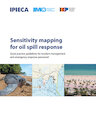
Sensitivity maps convey essential information to those responding to oil spills by identifying the sites of coastal resources and environmentally-sensitive areas. (Revision 2016)
This report provides a summary and analysis of the current ROV fleet...
This report focuses on identifying capabilities and gaps associated with surveillance monitoring from aircraft, covering both surveillance platforms and sensors. The report then conducts an assessment of the capabilities of the technology for OSR and provides findings for enhanced use of the technology by the industry.
This report provides an assessment of satellite surveillance for oil spill response and focuses on identifying capabilities and gaps associated with surveillance monitoring from satellites. The report focuses on the surveillance capabilities of satellites, considering both the intrinsic capabilities and the practical and operational capabilities of sensors
This report evaluates a range of oil detection sensors and oceanographic vehicles and their overall compatibility for detecting and tracking oil in water. Oil detection sensors include in situ contact sensors that utilize either direct or indirect sensing methods and surface remote sensors that utilize either passive or active sensing methods. Oceanographic vehicles include autonomous underwater vehicles (AUVs), autonomous surface vehicles (ASVs), and manned surface vessels.
The Oil Spill Joint Industry Project (JIP) technical report (Revision 2016)

The 'Plastic pellets clean-up field guide' provides practical, operational guidance to support safe and effective recovery following a marine or coastal plastic pellets incident.
A technical support document to accompany the Ipieca-IOGP guidance on surface and subsurface dispersant

This updated edition reflects five years of industry experience and technical advancements.
An Incident Management System (IMS) is essential to optimizing response times and efficiency, providing clarity in command and control, improving resource coordination and communications, and facilitating the cooperation and integration of responding organizations.
This guidance considers the effects of oil releases on fisheries, tourism and other commercial activities, and outlines available compensation schemes.

This technical support document describes how to manage all the required onshore activities when dealing with an oil spill.
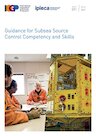
This report was developed to share guidance with those interested in understanding subsea well response competency and the skills that sit within it.
In-situ burning (ISB) is the controlled combustion or burning of hydrocarbon vapours...
This document sets out the important factors to be considered when contemplating the clean-up of an oiled shoreline... (Revision 2016)
Title Type Theme Published Download 
Oil spill waste minimization and management Good practice guidance Marine spill preparedness and response 04 Dec 2025 
Oil spill exercises Good practice guidance Marine spill preparedness and response 10 Aug 2023 
Oil spill responder health and safety Good practice guidance Marine spill preparedness and response 10 Aug 2023 
Oil spill surveillance planning guidance Good practice guidance Marine spill preparedness and response 23 Nov 2021 
Oil spill monitoring and sampling Good practice guidance Marine spill preparedness and response 20 Nov 2020 
Oil spill preparedness and response: an introduction Good practice guidance Marine spill preparedness and response 12 Aug 2019 
Oil spills: inland response Good practice guidance Marine spill preparedness and response 09 Sep 2015 
Oil spill training Good practice guidance Marine spill preparedness and response 24 Feb 2014 
Oil spill risk assessment and response planning for offshore installations Good practice guidance Marine spill preparedness and response 08 Feb 2013 
Oil Spill Preparedness Regional Initiative (OSPRI) Awareness brief Marine spill preparedness and response 22 May 2005 
Readiness evaluation tool for oil spills Good practice guidance Marine spill preparedness and response 09 Jul 2024 
Impacts of oil spills on marine ecology Good practice guidance Marine spill preparedness and response 12 Nov 2015 
Impacts of oil spills on shorelines Good practice guidance Marine spill preparedness and response 21 May 2015 
In-water surveillance of oil spills at sea Good practice guidance Marine spill preparedness and response 01 May 2015 
Contingency planning for oil spills on water Good practice guidance Marine spill preparedness and response 15 Apr 2015 
Aerial observation of oil spills at sea Good practice guidance Marine spill preparedness and response 15 Feb 2015 
At-sea monitoring of surface dispersant effectiveness Oil Spill Good practice guidance Marine spill preparedness and response 08 Feb 2015 
Sensitivity mapping for oil spill response Good practice guidance Marine spill preparedness and response 27 Apr 2012 
Capabilities and uses of sensor and video - equipped waterborne surveillance-ROVs for subsea detection and tracking of oil spills. Awareness brief Marine spill preparedness and response 14 Dec 2014 
An assessment of surface surveillance capabilities for oil spill response using airborne remote sensing Awareness brief Marine spill preparedness and response 16 May 2014 
An assessment of surface surveillance capabilities for oil spill response using satellite remote sensing Awareness brief Marine spill preparedness and response 16 Apr 2014 
Capabilities and uses of sensor-equipped ocean vehicles for subsea and surface detection and tracking of oil spills Awareness brief Marine spill preparedness and response 16 Mar 2014 
The use of decanting during offshore oil spill recovery operations Awareness brief Marine spill preparedness and response 14 May 2013 
Plastic pellets clean-up field guide Good practice guidance Marine spill preparedness and response 26 Jan 2026 
Dispersant storage, maintenance, transport and testing Good practice guidance Marine spill preparedness and response 22 Jan 2026 
Source control emergency response planning guide for subsea wells Good practice guidance Marine spill preparedness and response 11 Sep 2025 
Incident Management System for the oil and gas industry Good practice guidance Marine spill preparedness and response 10 Aug 2023 
Economic assessment and compensation for marine oil releases Good practice guidance Marine spill preparedness and response 20 Oct 2022 
Shoreline response programme guidance Good practice guidance Marine spill preparedness and response 14 Jul 2020 
Guidance for subsea source control competency and skills Good practice guidance Marine spill preparedness and response 01 Jan 2019 
Controlled in-situ burning of spilled oil Good practice guidance Marine spill preparedness and response 20 Oct 2016 
A guide to shoreline clean-up techniques Good practice guidance Marine spill preparedness and response 10 Dec 2015