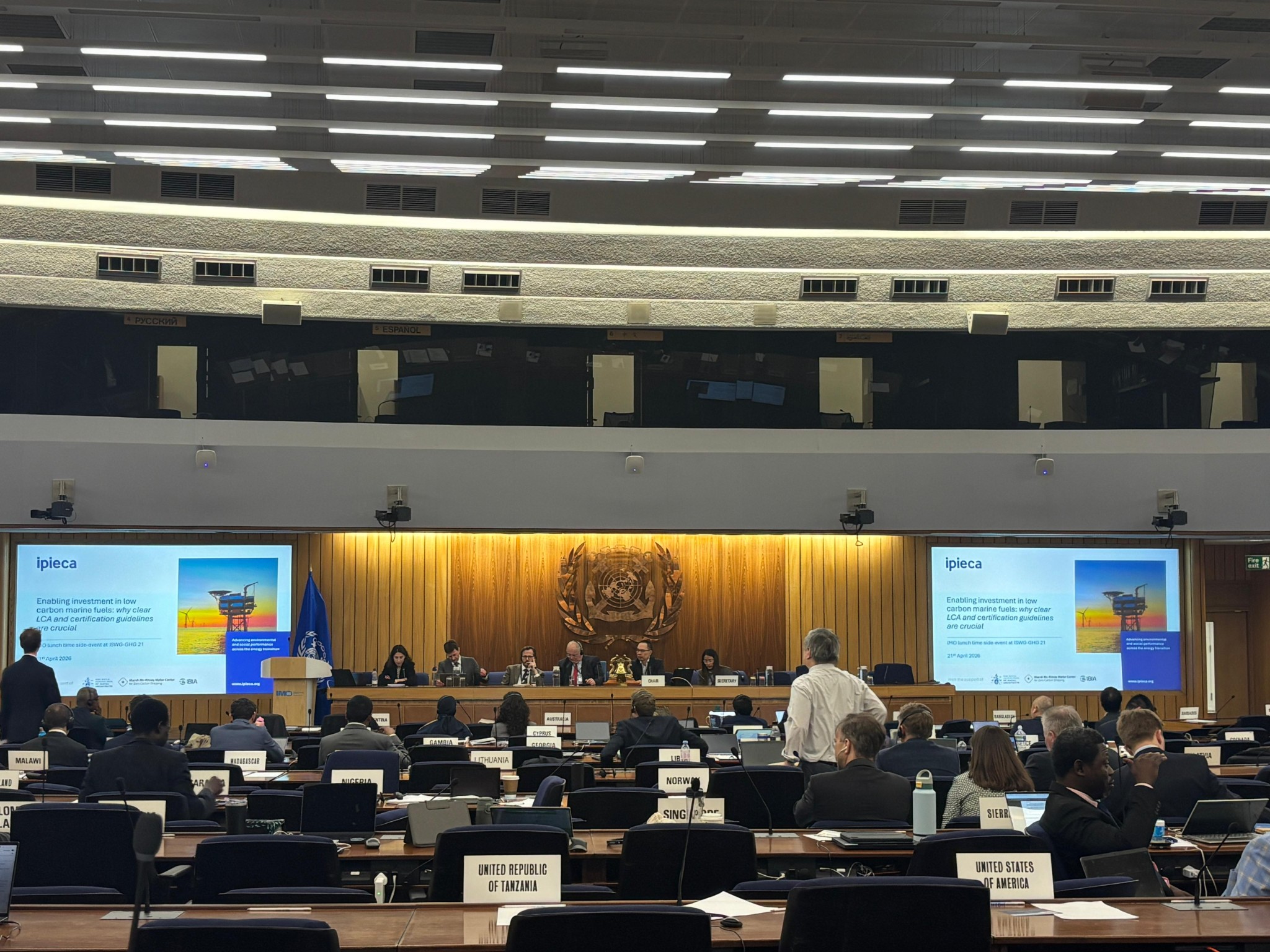
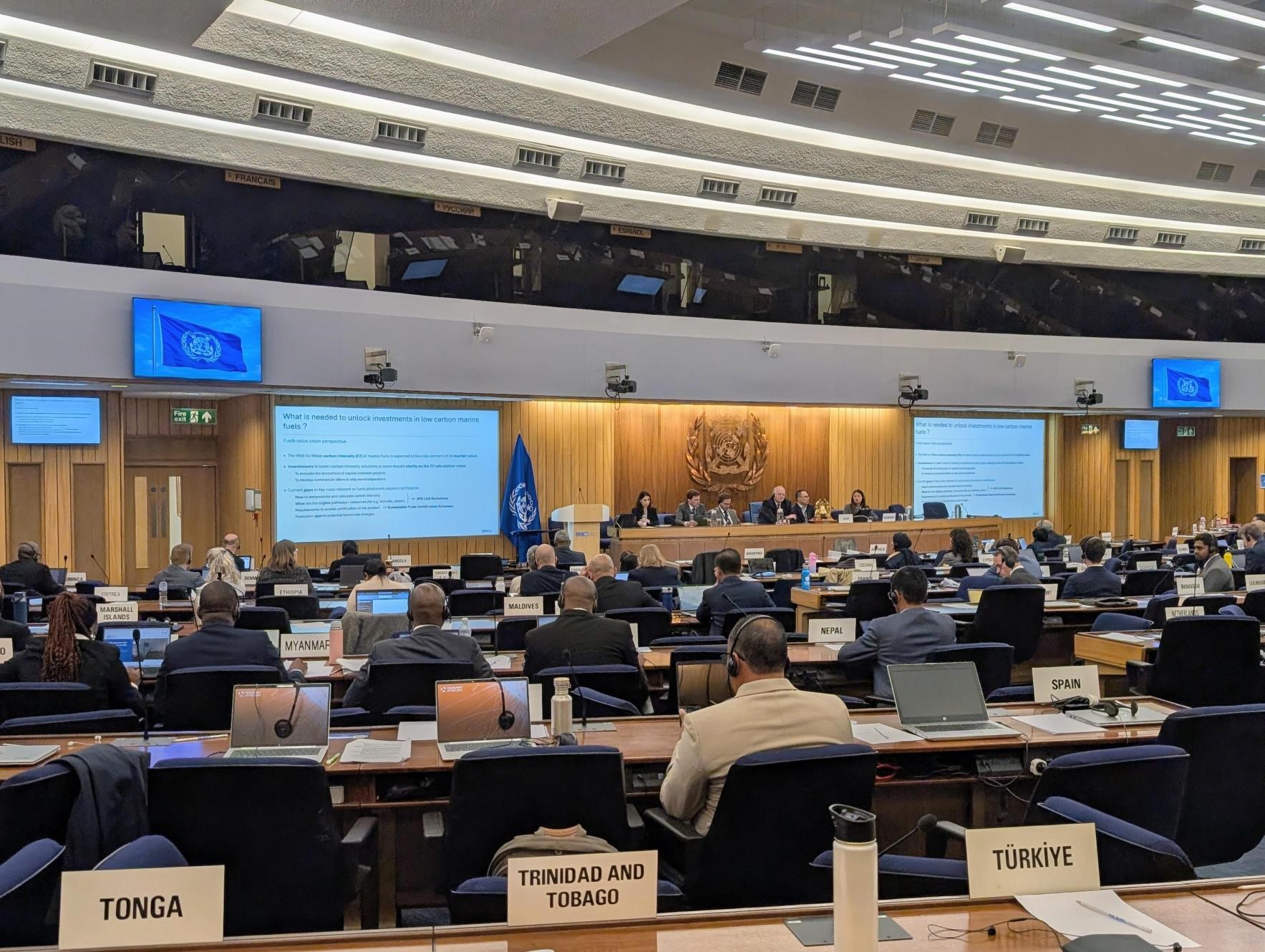
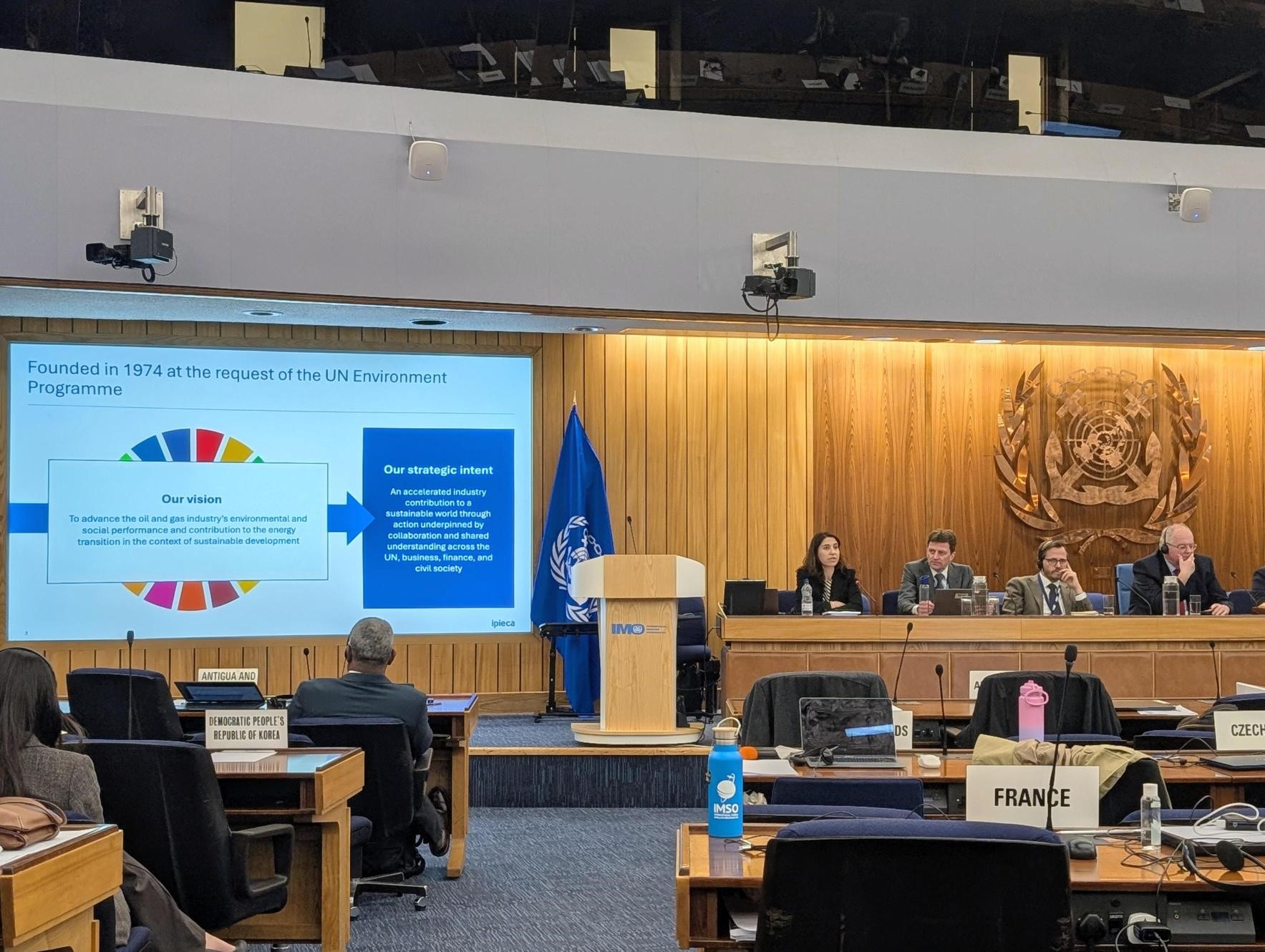
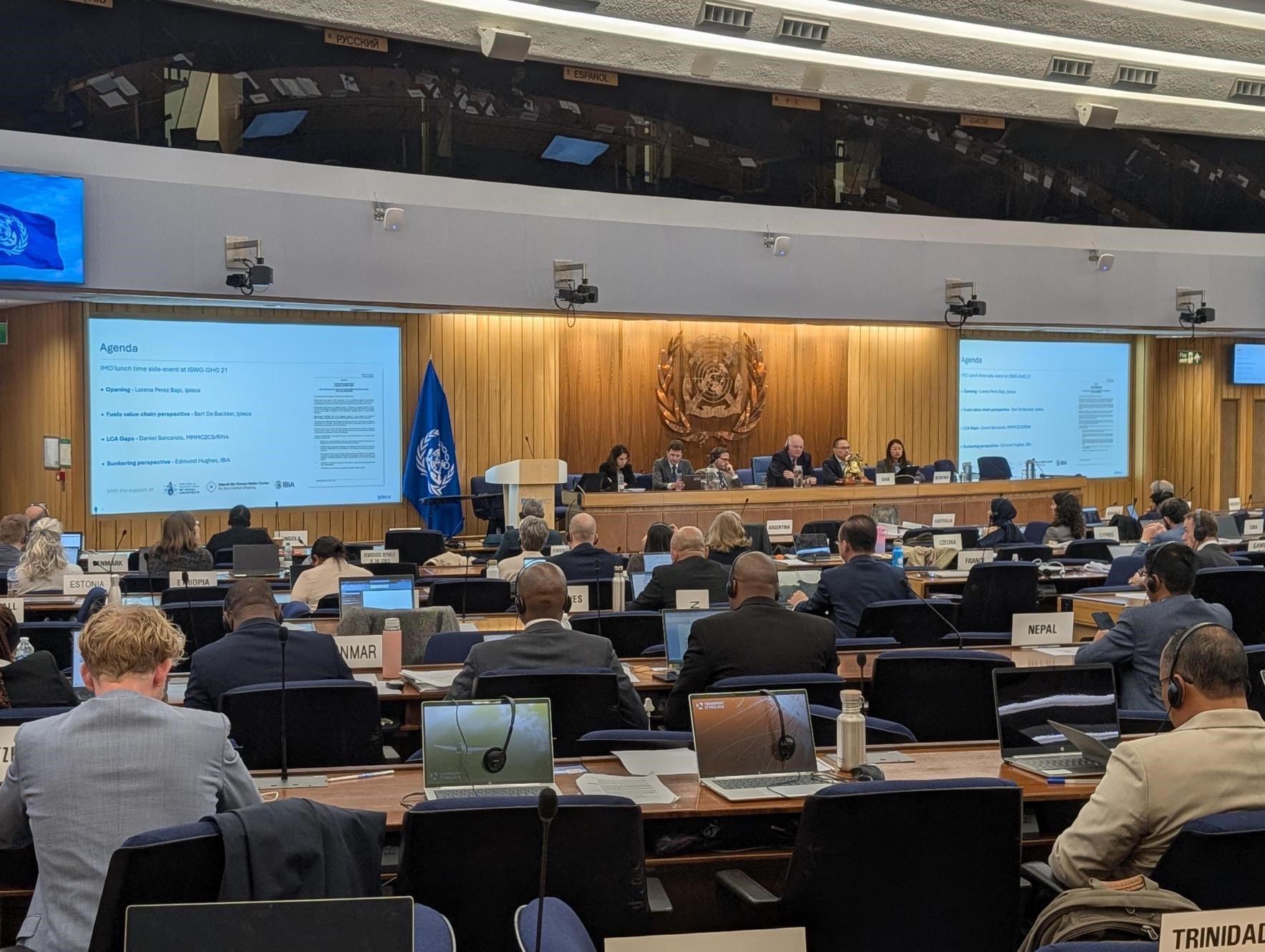
As a specialised agency of the United Nations, the International Maritime Organization (IMO) is the global standard-setting authority for the safety, security and environmental performance of international shipping. Its main role is to create a regulatory framework for the shipping industry that is fair and effective, universally adopted and universally implemented.
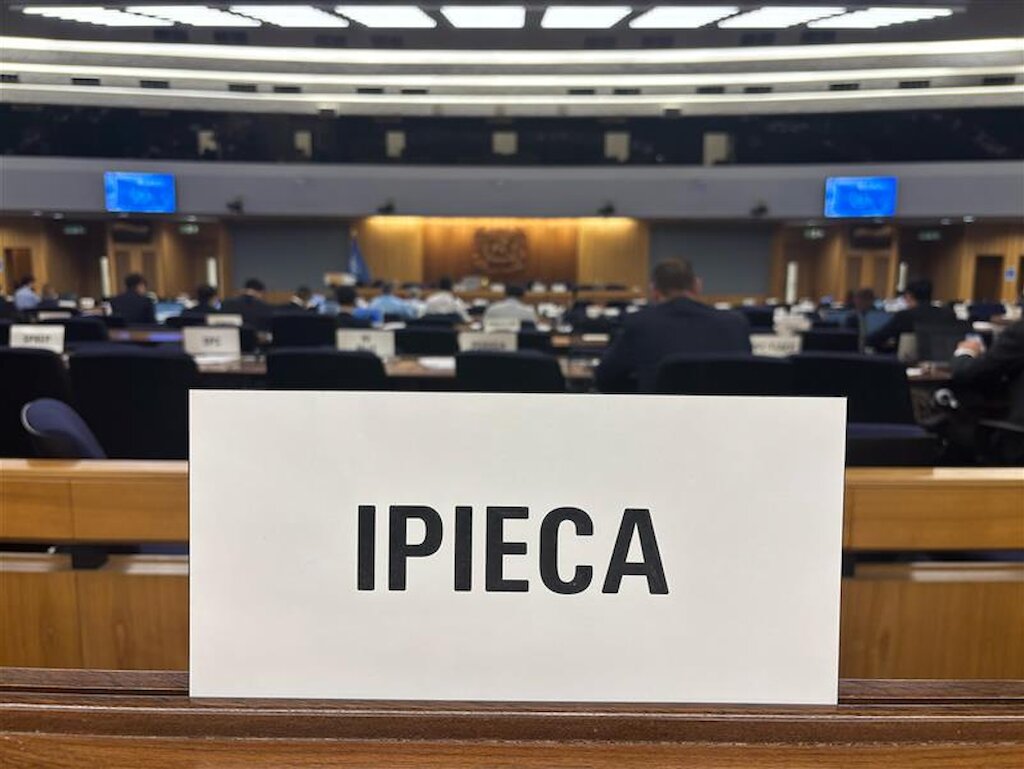
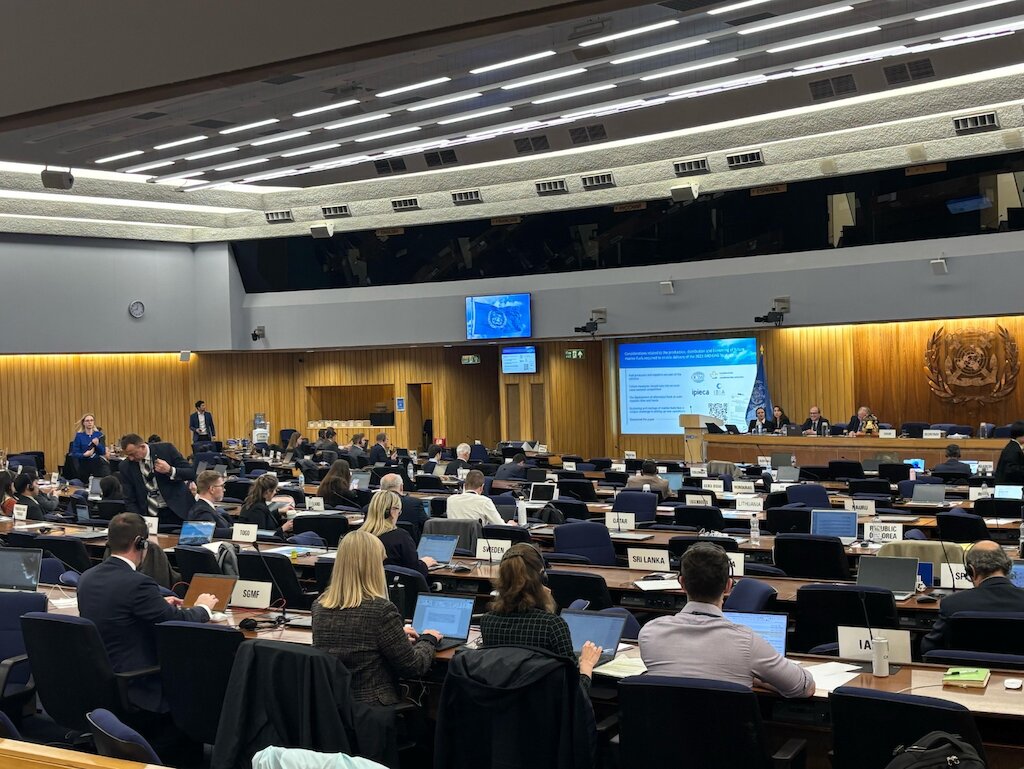
The Intersessional Working Group on Reduction of Greenhouse Gas (GHG) Emissions from Ships (ISWG-GHG 21) met for its 21st meeting from 20 to 24 April, 2026.
The ISWG-GHG is a technical working group which feeds into the IMO’s Marine Environment Protection Committee (MEPC) work on reducing GHG emissions from shipping. This meeting included discussions around:
- Development of guidelines of the IMO Net-Zero Framework
- Life cycle GHG assessment (LCA) framework
- The Fifth IMO GHG study
Ipieca submissions and technical discussions
Ipieca delegates participated in technical discussions during the meeting, in particular on discussions related to the submissions that Ipieca submitted or co-sponsored for the meeting:
- Amendments to the 2024 LCA guidelines: proposal of data quality assessment approach for the submission and selection of proposed default GHG emission factors
- Comments on the report of the second meeting of the Group of Experts on the Scientific Aspects of Marine Environmental Protection Working Group on Life Cycle GHG Intensity of Marine Fuels
- Proposal to modify the 2024 guidelines on life cycle GHG intensity of marine fuels to clarify the methodology to determine actual emission factors
- Proposal to expand on the use of power purchase agreements and inclusion of spot purchases
- Proposed avoided emissions definition and methodological approach for the well-to-tank (WtT) GHG emission factor parameter efecu (note: efecu are the emissions associated with the feedstock extraction, cultivation, acquisition and recovery)
- Proposal for how to address the WtT emissions of fuel pathways for ships using cargo as fuel under the 2024 LCA Guidelines
- Further proposal on guidelines on requirements and procedures for the recognition of sustainable fuel certification schemes and reporting of certification activities
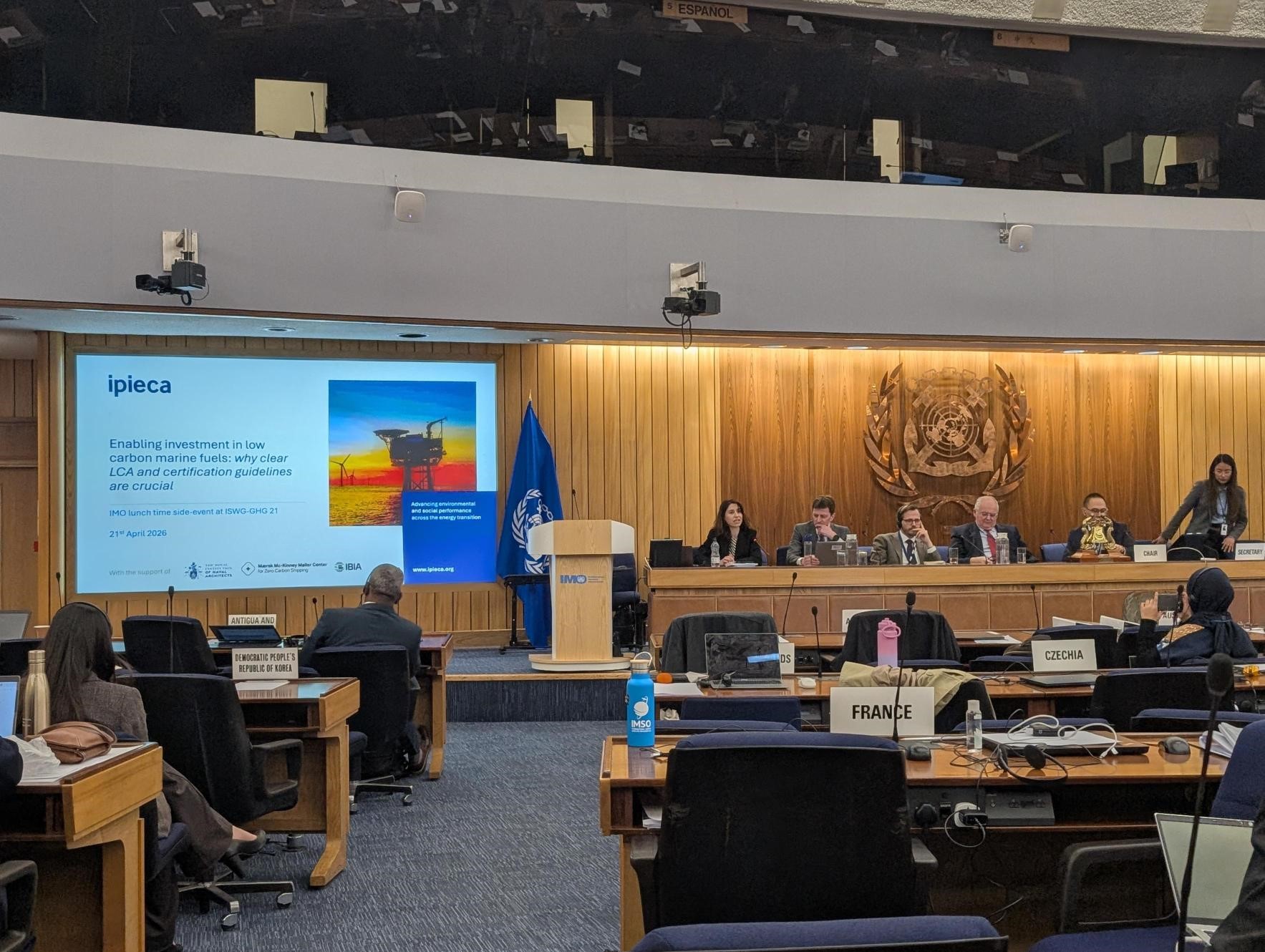
Ipieca side event
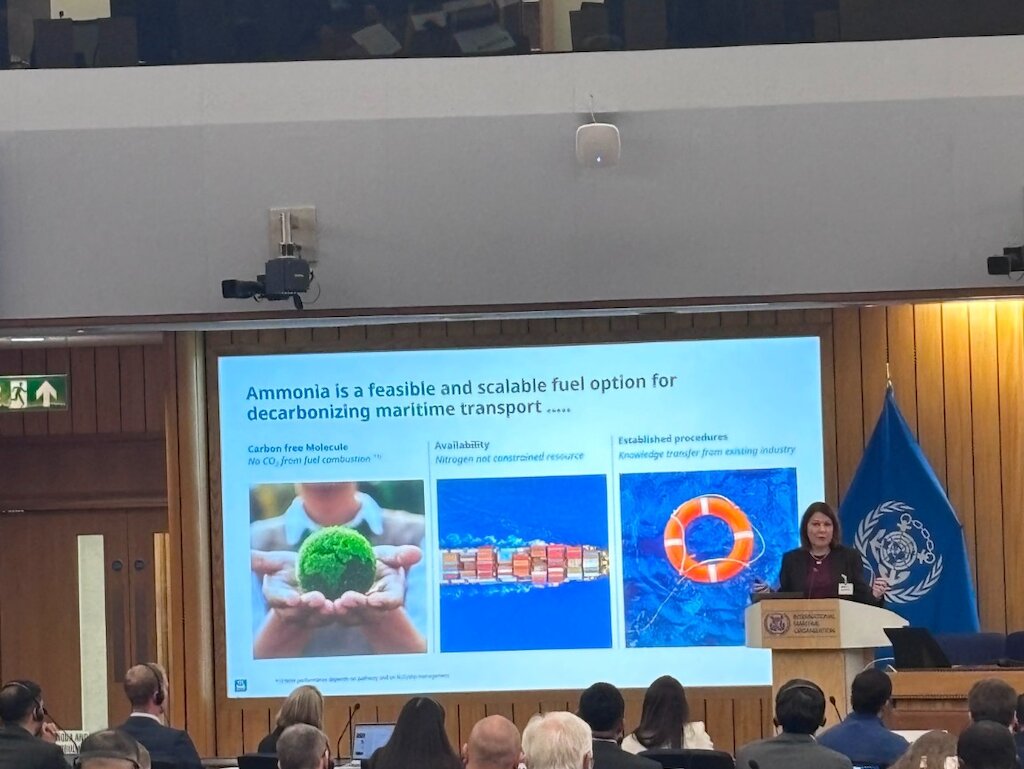
Ipieca also hosted a side-event during ISWG-GHG 21, in collaboration with IBIA, Mærsk Mc-Kinney Møller Center for Zero Carbon Shipping and RINA, focusing on Enabling investment in low-carbon marine fuels: why clear LCA and certification guidelines are crucial. The discussions included insights around the following:
- Cross‑sector fuels value chains: marine fuels are part of wider energy systems; aligning supply chains, facilities and certification across sectors can improve efficiency and consistency
- LCA remains a central challenge: the IMO has discussed LCA for years, with renewed focus due to fuel certification, default vs actual values, chain of custody, and unresolved methodological gaps
- Guidelines before decisions: robust, practical LCA guidelines are critical to manage commercial and safety risks; industry can inform options, but decisions rest with Member States
- Bunkering and last‑mile issues: bunkering is part of the fuel supply chain and must be covered by certification and goal-based marine fuel-oil intensity calculations; current systems rely on defaults and bunker delivery notes at point of transfer
- Long investment timelines: new fuel projects are capital‑intensive and take years to reach final investment decision; regulatory uncertainty can delay investments, reinforcing the need for policy clarity
You can read more about the meeting discussion here.
Next meetings
Two inter-sessional meetings will be scheduled (1 to 4 September and 23 to 27 November, 2026) ahead of MEPC 85 (30 November to 3 December), as well as a one-day expert workshop on chain of custody models, which track fuel origin and movement of fuels across the supply chain, ensuring emissions are properly traced and verified.
Find out more about Ipieca support for the IMO.