Ipieca’s industry leading good practice guidance and resources support oil, gas and alternative energy companies to advance their climate action, environmental responsibility, social performance and integrate sustainability across their operations and supply chains.
The filter below allows you to search for guidance and resources by theme, type, language and date as well as entering a search enquiry.
The purpose of this document is to provide guidance on estimating the effectiveness of dispersant application in the field by describing: the factors that determine the effectiveness of dispersant; and how the effectiveness of dispersant application in the field may be monitored, evaluated and verified
This report provides a summary and analysis of the current ROV fleet...
The document provides an overview of the key concepts and solutions in oiled wildlife response preparedness, and explains how a higher level of integrated preparedness can be achieved. (Revision 2016)
This report focuses on identifying capabilities and gaps associated with surveillance monitoring from aircraft, covering both surveillance platforms and sensors. The report then conducts an assessment of the capabilities of the technology for OSR and provides findings for enhanced use of the technology by the industry.
The Oil Spill Industry Project (JIP) technical report (Revision 2016)
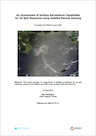
This report provides an assessment of satellite surveillance for oil spill response and focuses on identifying capabilities and gaps associated with surveillance monitoring from satellites. The report focuses on the surveillance capabilities of satellites, considering both the intrinsic capabilities and the practical and operational capabilities of sensors
In the event of a major incident, neighbouring companies may be asked to provide responders, oil spill response equipment and associated materials, either individually or as part of a mutual aid programme.
In general, mutual aid plans are written to encompass the possibility that responders
The Oil Spill Industry Project (JIP) technical report (Revision 2016)
This report evaluates a range of oil detection sensors and oceanographic vehicles and their overall compatibility for detecting and tracking oil in water. Oil detection sensors include in situ contact sensors that utilize either direct or indirect sensing methods and surface remote sensors that utilize either passive or active sensing methods. Oceanographic vehicles include autonomous underwater vehicles (AUVs), autonomous surface vehicles (ASVs), and manned surface vessels.
Responder training is an essential pre-condition for effective oil spill response, which requires personnel who understand... (Revision 2)


