Ipieca’s industry leading good practice guidance and resources support oil, gas and alternative energy companies to advance their climate action, environmental responsibility, social performance and integrate sustainability across their operations and supply chains.
The filter below allows you to search for guidance and resources by theme, type, language and date as well as entering a search enquiry.
The Paris Puzzle: The Pathway to a low-emissions future lays out our global membership view on the challenges the world faces in transitioning to a low-greenhouse gas emissions future.
The briefing highlights the role of oil and gas in supporting a just transition, the regional complexities of a net-zero future and the need for collaboration to scale up energy transition enablers.
SPE Gaia and SPE CCUS Technical Section, IOGP, OGCI and Ipieca, are hosting a webinar series sharing knowledge and good practice around the scaling up of CCS technology, including key issues, environmental responsibility, financial incentives, policy, and liability concerns.

This webinar focuses on the World Bank GFMR's 2026 Global gas flaring tracker report. It highlights recent updates to the tracker’s methodology, which aims to improve the accuracy and consistency of global gas flaring estimates, as well as an overview of the GFMR 2025 annual progress report.

Covering a range of topics on sustainable financing and derisking investments across the full value chain—from capture to transport and storage.
This fact sheet explores key aspects of biofuels and explains the role of biofuels in the energy transition, outlining the main biofuel types, feedstocks and production pathways, as well as where and how biofuels are used across transport and other sectors. It also describes how biofuel sustainability is assessed.

This webinar offers a range of perspectives around permitting to development for CCS, including but not limited to, topics such as experiences in permitting, discussions around social acceptance, long-term liability, jurisdictional differences and lessons learned.
Ipieca, in partnership with Arpel, ACP and AMEXHI, and supported by IOGP and OGDC, held a series of three webinars for the Latin American region focused on methane emissions.
Responding to the continuous advancement of technology, Ipieca, IOGP, OGCI, and the Energy Institute have released an update of this guidance and online tool to help operators select and deploy methane detection and quantification technologies.

This webinar focuses on the World Bank Global Flaring and Methane Reduction Partnership’s (GFMR) recently launched '2025 Global gas flaring tracker report', with special insights and key takeaways from our speakers.

This webinar provides a comprehensive overview of the updated Compendium and will showcase how industry peers are already utilising the document to action real energy efficiency improvements within their operations.

This webinar offers a range of perspectives around CO₂-EOR, including but not limited to topics such as latest research and science, operator experiences, as well as challenges and opportunities related to the CO₂-EOR process.
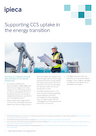
This fact sheet highlights the role of CCS in the energy transition, how the oil and gas industry can support uptake of CCS carbon capture and storage (CCS) technologies, some case studies from Ipieca members, and looking ahead at how Ipieca will support future progress.

This report is a summary of a virtual workshop that Ipieca hosted on 'Approaches to estimating financial impacts of climate change'. This was the third virtual workshop in a series on climate change adaptation and resilience.

This webinar offers a range of perspectives around the social acceptance of CCS, including but not limited to topics such as perceived risk, partnership cooperation and stakeholder engagement.
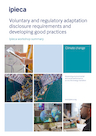
This report is a summary of a virtual workshop that Ipieca hosted on voluntary and regulatory adaptation disclosure requirements and developing good practices. This was the second virtual workshop in a series on climate change adaptation and resilience.
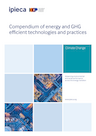
This online compendium provides an introduction to energy efficiency measures for oil and gas facilities, and aims to raise awareness and uptake of such technologies and practices across the industry.
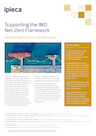
Ipieca works closely to support IMO work to decarbonise the maritime industry, providing technical expertise across a range of areas to identify good practices and develop industry guidance.
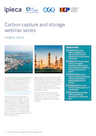
Ipieca, OGCI, SPE Gaia, and IOGP collaborated on a webinar series sharing knowledge and good practice around the scaling up of CCS technology, including key issues, environmental responsibility, financial incentives and liability concerns.

Gain insights and key takeaways from the World Bank's Global Flaring and Methane Reduction Partnership’s (GFMR) annual 'Global gas flaring tracker report'.
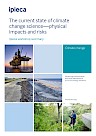
In the oil and gas industry, climate change adaptation and resilience are essential for companies to manage the impacts of climate change on operations and assets. This includes adapting to changes such as extreme weather and rising sea levels, as well as building resilience in supply chains and portfolios.
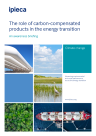
This briefing builds a shared understanding of carbon-compensated products, their role in supporting net-zero ambitions and the energy transition, and explores good practice in using them.
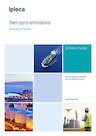
This glossary was developed to support the oil and gas industry and other stakeholders in the use of consistent terminology around net-zero emissions.
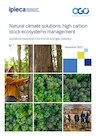
The Ipieca-OGCI Natural climate solutions: high carbon stock ecosystems management guidance supports the Paris Agreement goals by setting out the key principles to help energy companies conserve, enhance and restore the high carbon stock ecosystems where they operate.
A summary of the Ipieca-OGCI guidance on natural climate solutions management.
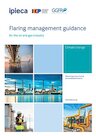
The Ipieca-IOGP-GGFR Flaring management guidance outlines new developments in flaring management and reduction, and examines industry experiences with eliminating flaring, new technologies, business models, operational improvements and regulatory policy.

This webinar introduces the 'Flaring management guidance for the oil and gas industry', a joint publication from Ipieca, IOGP and the World Bank Global Gas Flaring Reduction Partnership (GGFR).
This document provides a summary of the Ipieca-IOGP-GGFR Flaring management guidance for the oil and gas industry.
This document provides a high level summary of a series of four webinars that explore leading oil and gas organizations' efforts to reduce methane emissions.

Following an introduction to Ipieca's new briefing on hydrogen, this webinar will invite guest panellists to explore the essential role hydrogen can play in supporting the decarbonization of hard-to-abate sectors and a low-carbon future, as well as share industry case studies and opportunities.