Ipieca’s industry leading good practice guidance and resources support oil, gas and alternative energy companies to advance their climate action, environmental responsibility, social performance and integrate sustainability across their operations and supply chains.
The filter below allows you to search for guidance and resources by theme, type, language and date as well as entering a search enquiry.
The second edition of the Water management framework reflects the lessons learnt from members and stakeholders in the years since its original publication.
This fact sheet on provides a high-level overview of how companies in the oil and gas sector can define, assess and respond to water risks.
Ipieca has developed a new fact sheet on evaluating the opportunities and challenges of reusing produced water for the onshore oil and gas industry.
The guidance presents a systematic process for the onshore oil and gas industry to identify and assess potential measures to improve water efficiency via incorporating the principles of water stewardship, integrating water resource management
Optimized, effective waste management is integral to petroleum refinery operations. It helps minimize risk to both people and the environment, enhances resource utilization, and reduces costs.
This guide presents a systematic process for the onshore industry to select water sources that best meet project needs within the broader context of local or regional water management.
This guidance clarifies currently used terminology in the water stewardship space and presents users with a streamlined water stewardship action scheme that synthesises water frameworks and disclosure standards for the energy sector.
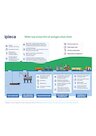
This infographic summarises the water and wastewater management uses in the oil and gas industry.
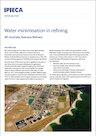
BP's Kwinana Refinery in Western Australia is located in an area that has experienced significant reduction in river flows.
This awareness briefing provides an overview of water management in the onshore development and production of oil and gas from shale.
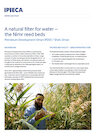
Petroleum Development Oman (PDO) / Shell.
Oman -Since 2011, a third of produced water from the Nimr oil feed in Oman has been treated in a purposely built reed bed facility.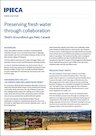
At Shell's Groundbirch venture, British Columbia, the local area is prone to water shortages. In order to minimise freshwater use, Shell and the City of Dawson Creek ...
In-house water risk assessment tool strengthens Repsol's water management performance
Good practice guidelines for incident management and emergency response personnel.
Oil spill contingency planning is the process of developing a suitable spill response capability that is in compliance with the local regulatory framework and commensurate with the oil spill risks of an organization or facility. (Revision 2016)
This report provides a summary and analysis of the current ROV fleet...
Statoil, an international energy company, expanding activities
within shale oil and gas in a sustainable manner
Shaping water management plans to meet local risks. Eni corporate worldwide oil and gas, petrochemical, refining and engineering operations.
ConocoPhillips undertakes the first pilot of the tool at the Surmont 1 Oil Sands development in Canada.
In late 2013, Ipieca co-hosted a webinar and workshop with the Global Environmental Management Initiative (GEMI) focused on water risk assessment tools, including the Ipieca Global Water Tool (GWT) for Oil and Gas, a customised version of the World Business Council for Sustainable Development (WBCSD) Global Water Tool, the GEMI Local Water Tool (LWT)
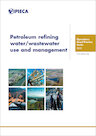
This manual describes typical 'best practices' and strategies used in petroleum refineries to manage water, including ways to reduce water usage. Improved water management in a petroleum refinery can potentially reduce the volume and cost of raw water used in refinery operations. Furthermore, improved water management may result in reductions in wastewater flow or contaminant load or both. Lower flow and contaminant load may result in lower wastewater treatment operating and maintenance costs. Optimized water management may also reduce the mass of contaminants in the treated effluent, thus improving the quality of a wastewater discharge and ultimately the environmental impact of a refinery's discharge.
This industry-specific document provides guidance on the prevention of food- and water-related diseases.

This report from Ipieca-Energy Institute-CIRIA helps companies integrate circular economy principles into every stage of an asset’s life cycle. It provides practical guidance, tools and examples to support the transition from linear approaches to more circular, resource-efficient ways of designing, building, operating and decommissioning assets.

The 'Plastic pellets clean-up field guide' provides practical, operational guidance to support safe and effective recovery following a marine or coastal plastic pellets incident.
A technical support document to accompany the Ipieca-IOGP guidance on surface and subsurface dispersant
This document introduces the principles of oil spill waste management, emphasising the need to incorporate a waste management plan as part of the oil spill contingency planning process.

This report presents a comprehensive synthesis of current concepts and methodologies for addressing the challenges of defining, implementing and measuring marine net positive impact (NPI).

This updated edition reflects five years of industry experience and technical advancements.
This report evaluates existing circular economy measurement frameworks and identifies how a combination of frameworks enables better measurement of circular economy by oil and gas companies.
As we transition to a more sustainable future, alternative fuels and their associated products are becoming more prevalent in production, manufacturing and use. Their safe handling and prevention of spills is a priority.
This document provides examples of how Ipieca companies are taking ambitious biodiversity actions which contribute towards the goals of the Global Biodiversity Framework.
This 3-part webinar series aims to deepen understanding around the challenges and solutions to the increased demand for mining raw materials for the energy transition, particularly in wind and solar energy projects.


