Ipieca’s industry leading good practice guidance and resources support oil, gas and alternative energy companies to advance their climate action, environmental responsibility, social performance and integrate sustainability across their operations and supply chains.
The filter below allows you to search for guidance and resources by theme, type, language and date as well as entering a search enquiry.
This new fact sheet explores the scale-up and deployment of CCS in more detail and presents a series of facts about the necessary development of this technology.
Ipieca, OGCI, SPE Gaia, and IOGP collaborated on a webinar series sharing knowledge and good practice around the scaling up of CCS technology, including key issues, environmental responsibility, financial incentives and liability concerns.
The briefing highlights the role of oil and gas in supporting a just transition, the regional complexities of a net-zero future and the need for collaboration to scale up energy transition enablers.
This fact sheet highlights the role of CCS in the energy transition, how the oil and gas industry can support uptake of CCS carbon capture and storage (CCS) technologies, some case studies from Ipieca members, and looking ahead at how Ipieca will support future progress.
Ipieca held a workshop - Making CCS fly - that brought together more than 50 participants from across the oil and gas sector and expert communities to discuss the role, barriers and opportunities presented by CCS.
During Ipieca Week 2026, Ipieca stakeholders were invited to provide insights on the global energy system's profound transformation.
During Ipieca Week 2026, Ipieca stakeholders were invited to provide insights on the complex and interconnected development realities of Global South countries as they pursue economic and social progress while aiming to meet climate and nature goals.
This fact sheet explores key aspects of biofuels and explains the role of biofuels in the energy transition, outlining the main biofuel types, feedstocks and production pathways, as well as where and how biofuels are used across transport and other sectors. It also describes how biofuel sustainability is assessed.
This briefing builds a shared understanding of carbon-compensated products, their role in supporting net-zero ambitions and the energy transition, and explores good practice in using them.

Following an introduction to Ipieca's new briefing on hydrogen, this webinar will invite guest panellists to explore the essential role hydrogen can play in supporting the decarbonization of hard-to-abate sectors and a low-carbon future, as well as share industry case studies and opportunities.
The latest paper in Ipieca's low-emissions pathways series provides an overview of hydrogen technology and areas of application, with a range of industry case studies.
During Ipieca Week 2025, stakeholders were invited to provide insights on how Ipieca can help put nature, people and climate at the heart of the energy transition, working towards an accelerated industry contribution to a sustainable world.
This joint Ipieca-IOGP awareness briefing explores what is currently known about the health risks associated with energy transition-focused technologies.
This 3-part webinar series aims to deepen understanding around the challenges and solutions to the increased demand for mining raw materials for the energy transition, particularly in wind and solar energy projects.
An update to the compendium, first published in 2020, is now available. It aims to support renewable energy developers to enhance the environmental and social performance of their projects and operations.
This report provides an overview of key messages from the two stakeholder panels exploring how Ipieca can support its members to lead the industry’s contribution to a sustainable energy transition, and how Ipieca can provide a trusted/safe channel for dialogue and collaboration with key stakeholders.
This document outlines the key messages on BES good practices for the industry, and explores how industry and governments can support and work with each other to mainstream biodiversity across the energy transition.
The report includes each speakers' insights on the technologies, actions and pathways required to achieve the energy transition and recommendations for how Ipieca, its members and the industry can accelerate their development.

Carbon capture and storage (CCS) is a key technology in transforming the energy system and moving towards the long-term temperature goals of the Paris Agreement. However, there are several barriers preventing it from expanding more swiftly.
 Carbon Capture and Storage: A key technology for delivering a low-emissions world (The Paris Puzzle)
Carbon capture and storage: A key technology for delivering a low-emissions world is one piece of the Paris Puzzle...
Widespread deployment of carbon capture and storage (CCS) requires addressing remaining knowledge gaps and implementation barriers. Resolving these involves a portfolio of activities including research and development, demonstration projects, and developing
SPE Gaia and SPE CCUS Technical Section, IOGP, OGCI and Ipieca, are hosting a webinar series sharing knowledge and good practice around the scaling up of CCS technology, including key issues, environmental responsibility, financial incentives, policy, and liability concerns.

Covering a range of topics on sustainable financing and derisking investments across the full value chain—from capture to transport and storage.

This webinar offers a range of perspectives around permitting to development for CCS, including but not limited to, topics such as experiences in permitting, discussions around social acceptance, long-term liability, jurisdictional differences and lessons learned.

This webinar offers a range of perspectives around CO₂-EOR, including but not limited to topics such as latest research and science, operator experiences, as well as challenges and opportunities related to the CO₂-EOR process.

This webinar offers a range of perspectives around the social acceptance of CCS, including but not limited to topics such as perceived risk, partnership cooperation and stakeholder engagement.
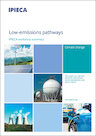
The Ipieca-organized workshop, held in Houston, Texas on 15-16 March 2016, brought together experts from academia, business, governments, and international and non-governmental organizations...
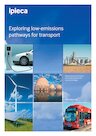
Ipieca has released a new awareness brief, Exploring low-emissions pathways for transport which builds on the 2016 Ipieca publication Exploring low-emission pathways: Advancing the Paris Puzzle.
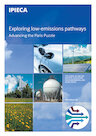
This publication builds on Ipieca's 2015 Paris Puzzle, providing perspective on the common elements and enablers of pathways to meet a low-emissions future.
The Paris Puzzle: The Pathway to a low-emissions future lays out our global membership view on the challenges the world faces in transitioning to a low-greenhouse gas emissions future.

This webinar focuses on the World Bank GFMR's 2026 Global gas flaring tracker report. It highlights recent updates to the tracker’s methodology, which aims to improve the accuracy and consistency of global gas flaring estimates, as well as an overview of the GFMR 2025 annual progress report.
Ipieca, in partnership with Arpel, ACP and AMEXHI, and supported by IOGP and OGDC, held a series of three webinars for the Latin American region focused on methane emissions.


