Ipieca’s industry leading good practice guidance and resources support oil, gas and alternative energy companies to advance their climate action, environmental responsibility, social performance and integrate sustainability across their operations and supply chains.
The filter below allows you to search for guidance and resources by theme, type, language and date as well as entering a search enquiry.
This fact sheet highlights the role of CCS in the energy transition, how the oil and gas industry can support uptake of CCS carbon capture and storage (CCS) technologies, some case studies from Ipieca members, and looking ahead at how Ipieca will support future progress.

Ipieca, SPE Gaia, OGCI and IOGP are pleased to host a webinar with actors from the oil and gas, steel, cement and petrochemicals industries to discuss CCS.
This new fact sheet explores the scale-up and deployment of CCS in more detail and presents a series of facts about the necessary development of this technology.
This document provides a high level summary of a series of four webinars that explore leading oil and gas organizations' efforts to reduce methane emissions.
Ipieca, OGCI, SPE Gaia, and IOGP collaborated on a webinar series sharing knowledge and good practice around the scaling up of CCS technology, including key issues, environmental responsibility, financial incentives and liability concerns.

The increasing global movement of people and goods elevates the risk of the introduction, spread, and establishment of invasive alien species (IAS), impacting biodiversity and businesses. This document provides guidance for prevention and management.

Carbon capture and storage (CCS) is a key technology in transforming the energy system and moving towards the long-term temperature goals of the Paris Agreement. However, there are several barriers preventing it from expanding more swiftly.
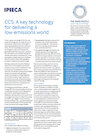 Carbon Capture and Storage: A key technology for delivering a low-emissions world (The Paris Puzzle)
Carbon capture and storage: A key technology for delivering a low-emissions world is one piece of the Paris Puzzle...
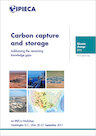
Widespread deployment of carbon capture and storage (CCS) requires addressing remaining knowledge gaps and implementation barriers. Resolving these involves a portfolio of activities including research and development, demonstration projects, and developing
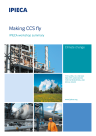
Ipieca held a workshop - Making CCS fly - that brought together more than 50 participants from across the oil and gas sector and expert communities to discuss the role, barriers and opportunities presented by CCS.

This webinar provides an overview of the guidance, its key recommendations and practical applications for the energy and infrastructure sectors. Through real-world examples from pipeline infrastructure and nuclear decommissioning, speakers share lessons learned, barriers overcome and opportunities for delivering circular outcomes at scale.

This webinar series explores current regulatory frameworks, implementation challenges and emerging priorities, with a particular focus on petroleum substances and UVCBs. Beginning with a global overview, it will be followed by regional sessions covering Latin America, South East Asia, Africa and the Middle East.

This webinar provides context and an overview of the Globally Harmonized System of Classification and Labelling of Chemicals, featuring the International Council of Chemical Associations and Shell.

This webinar focuses on the World Bank GFMR's 2026 Global gas flaring tracker report. It highlights recent updates to the tracker’s methodology, which aims to improve the accuracy and consistency of global gas flaring estimates, as well as an overview of the GFMR 2025 annual progress report.
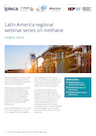
Ipieca, in partnership with Arpel, ACP and AMEXHI, and supported by IOGP and OGDC, held a series of three webinars for the Latin American region focused on methane emissions.

This webinar focuses on the World Bank Global Flaring and Methane Reduction Partnership’s (GFMR) recently launched '2025 Global gas flaring tracker report', with special insights and key takeaways from our speakers.

This webinar provides a comprehensive overview of the updated Compendium and will showcase how industry peers are already utilising the document to action real energy efficiency improvements within their operations.

This webinar provides a comprehensive overview of what the new compendium covers, as well as a virtual stakeholder panel session featuring key stakeholders who contributed to its development, whom will discuss enablers, barriers and the business case for co-use.

This webinar shares the essential steps in producing a sustainability report for oil and gas companies, providing guidance on the necessary processes, requirements, and best practices in the industry.

Ipieca, API, IOGP and Arpel hosted three webinars for companies in the Latin America region to support companies along their sustainability reporting journey. Learn about why sustainability reporting matters and how to produce a report.

To launch its new worker welfare resources, Ipieca hosted a webinar with key stakeholders to highlight tools and share implementation case-studies that the audience can learn from.

Gain insights and key takeaways from the World Bank's Global Flaring and Methane Reduction Partnership’s (GFMR) annual 'Global gas flaring tracker report'.

This new resource supports companies and practitioners to undertake engagement that moves beyond meeting the minimum expectations by providing guidance on broader, inclusive and ongoing two-way processes for ‘meaningful engagement’.
This 3-part webinar series aims to deepen understanding around the challenges and solutions to the increased demand for mining raw materials for the energy transition, particularly in wind and solar energy projects.

This UNEP webinar discusses social and employment considerations associated with the energy transition, with a focus on ways to encourage women’s representation in the new energy mix.

Arpel, IMO and Ipieca launch and present a live demonstration of the new web application of RETOS™ (Readiness Evaluation Tool for Oil Spills).

Ipieca is pleased to sponsor the re-launch of the Energy Local Content Map, which provides access to local content legislation, news and studies for over 30 countries around the world. Please join one of the two webinars by the Mining Shared Value programme of Engineers Without Borders Canada, to gain insights into the latest updates and features of the map and to learn about local content trends presented by guest speakers.

Ipieca and IOGP members share their companies' experiences in developing and utilising BAPs.

Ipieca is pleased to launch its labour rights training, developed with the contribution of Building Responsibly and hosted on the Supply Chain Sustainability School’s e-learning platform.

This webinar introduces the 'Flaring management guidance for the oil and gas industry', a joint publication from Ipieca, IOGP and the World Bank Global Gas Flaring Reduction Partnership (GGFR).

Following an introduction to Ipieca's new briefing on hydrogen, this webinar will invite guest panellists to explore the essential role hydrogen can play in supporting the decarbonization of hard-to-abate sectors and a low-carbon future, as well as share industry case studies and opportunities.

Ipieca has launched the Supply chain library of questions and resources and will be hosting a webinar to introduce the tool and provide a demonstration on how to utilise it most effectively.


