Ipieca’s industry leading good practice guidance and resources support oil, gas and alternative energy companies to advance their climate action, environmental responsibility, social performance and integrate sustainability across their operations and supply chains.
The filter below allows you to search for guidance and resources by theme, type, language and date as well as entering a search enquiry.
This Ipieca-IOGP guidance is designed to help HSE/SD professionals to develop biodiversity action plans (BAPs) for their activities and projects.
This document provides examples of how Ipieca companies are taking ambitious biodiversity actions which contribute towards the goals of the Global Biodiversity Framework.
The BES Fundamentals guidance document which brings together information essential to informing BES strategy development and decision making at the corporate level ...
A detailed program for protecting biodiversity while developing liquefied natural gas infrastructure in one of the world's lease explored regions
The report explores some of the major themes impacting the SLCFs discussion, and aims to: Identify and understand the effects on warming, precipitation, and air ...
Stakeholders play an important role in the development and implementation of Ipieca’s strategy. During Ipieca Week, input was sought from 19 stakeholders during 3 panels.
A joint UNDP, IFC, Ipieca and ICMM side event summary
Meeting energy needs: The unique role of oil and gas is one piece of the Paris Puzzle - a series of papers intended to address...
Appendices to the joint Ipieca-API document on technical considerations that are important for understanding and calculating GHG emission inventory uncertainty.
This joint Ipieca-API document is designed to provide a summary of technical considerations that are important for understanding and calculating greenhouse gas (GHG) emission inventory uncertainty.
Over the past year, the concepts of 'unburnable carbon', 'stranded assets' and a 'carbon bubble' have been promoted by a number of groups, gaining the attention of investors, academics and the media.
The effectiveness and efficiency of regulatory and other policy approaches intended to reduce the greenhouse gas emissions from transportation fuels can hinge on the fuel life-cycle analysis (LCA). This report provides a summary of the workshop of the same name, convened in September 2010
The uncertainties inherent in the data used for emission inventories help inform and improve understanding for the data's use. This is receiving increased attention in order to understand determinations of GHG emissions and emission reductions. This document provides background information, and details, on measurement uncertainty and statistical calculation methods that improve the quality of GHG emission estimations for the oil and gas industry. It is a collaborative effort between Ipieca, the American Petroleum Institute (API) and CONCAWE.

Ipieca and IOGP members share their companies' experiences in developing and utilising BAPs.
This joint Ipieca - UN Environment Programme World Conservation Monitoring Centre (UNEP-WCMC) report provides a summary of key drivers, challenges and opportunities for biodiversity and ecosystem services (BES) management in the oil and gas industry.
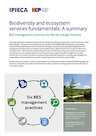
This document outlines the guidance for the management of biodiversity and ecosystem services impacts, dependencies, risks and opportunities in the oil and gas sector.
This document outlines the key messages on BES good practices for the industry, and explores how industry and governments can support and work with each other to mainstream biodiversity across the energy transition.
Ipieca and OGP have relaunched Managing Biodiversity & Ecosystem Services (BES) issues along the asset lifecycle in any environment: 10 tips forsuccess in the oil and gas industry. Originally published in 2010, the tips provide high level guidance on managing BES in the oil and gas industry. Each tip is supported by resources, many of which are Ipieca/OGP
The document has been prepared for the Multilateral Financing Institutions Biodiversity Working...

The Cross Sector Biodiversity Initiative (CSBI) Timeline Tool has been designed to assist project planning in the extractives industries to better align project development, biodiversity impact management, and financial timelines and milestones.

This product has been developed in partnership with UNEP-World Conservation Monitoring Centre (WCMC) and provides short definitions of over 200 commonly-used biodiversity terms and acronyms. The glossary was developed to support greater consistency in the use of terms and definitions related to biodiversity. The definitions have been
Ipieca is partnering with ICMM, the international Council on Mining & Metals and The Equator Principle Association in a Cross-Sector Biodiversity Initiative (CSBI). This forum is enabling cross-industry learning on the use of the biodiversity mitigation hierarchy, and the application of biodiversity offsets.
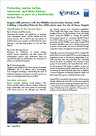
Angola LNG partners with the Wildlife Conservation Society while building a Liquefied Natural Gas (LNG) plant near the city of Soyo, Angola. Chevron case study.
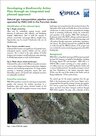
Natural gas transportation pipeline system operated by PERU LNG in the Peruvian Andes, Hunt Oil
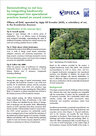
The Ecuadorian Amazon is one of the most sensitive natural environments where eni operates.
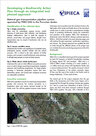
Peru LNG operations consist of a 408km natural gas transportation pipeline that traverses many diverse landscapes and ecosystems. This case study explains how a Biodiversity Action
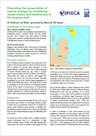
This case study details the work of Maersk Oil Qatar to monitor and protect marine ecology at the Al Shaheen oil field
The oil and gas industry both depends and impacts upon biodiversity and ecosystem services (BES). These checklists cover the five stages of the oil and gas life cycle for six generic habitat types, onshore and offshore.
The oil and gas industry both depends and impacts upon biodiversity and ecosystem services (BES). The aim of this guide is threefold. Firstly, it explains the relationship between biodiversity, ecosystem services and the oil and gas industry.

This webinar provides an overview of the guidance, its key recommendations and practical applications for the energy and infrastructure sectors. Through real-world examples from pipeline infrastructure and nuclear decommissioning, speakers share lessons learned, barriers overcome and opportunities for delivering circular outcomes at scale.
This report from Ipieca-Energy Institute-CIRIA helps companies integrate circular economy principles into every stage of an asset’s life cycle. It provides practical guidance, tools and examples to support the transition from linear approaches to more circular, resource-efficient ways of designing, building, operating and decommissioning assets.

This report presents a comprehensive synthesis of current concepts and methodologies for addressing the challenges of defining, implementing and measuring marine net positive impact (NPI).


