Ipieca’s industry leading good practice guidance and resources support oil, gas and alternative energy companies to advance their climate action, environmental responsibility, social performance and integrate sustainability across their operations and supply chains.
The filter below allows you to search for guidance and resources by theme, type, language and date as well as entering a search enquiry.
An update to the compendium, first published in 2020, is now available. It aims to support renewable energy developers to enhance the environmental and social performance of their projects and operations.
Ipieca has released a new awareness brief, Exploring low-emissions pathways for transport which builds on the 2016 Ipieca publication Exploring low-emission pathways: Advancing the Paris Puzzle.
As we transition to a more sustainable future, alternative fuels and their associated products are becoming more prevalent in production, manufacturing and use. Their safe handling and prevention of spills is a priority.
Ipieca has released updated guidance on lower-sulphur fuels, managing road transport emissions and improving air quality.
Ipieca has released updated guidance on lower-sulphur fuels, managing road transport emissions and improving air quality. Find the executive summary here.
The effectiveness and efficiency of regulatory and other policy approaches intended to reduce the greenhouse gas emissions from transportation fuels can hinge on the fuel life-cycle analysis (LCA). This report provides a summary of the workshop of the same name, convened in September 2010
Sulphur is naturally present in crude oil, and must be removed to create lower sulphur fuels. The removal processes present large technological and resource challenges.
During Ipieca Week 2026, Ipieca stakeholders were invited to provide insights on the global energy system's profound transformation.
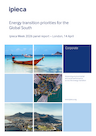
During Ipieca Week 2026, Ipieca stakeholders were invited to provide insights on the complex and interconnected development realities of Global South countries as they pursue economic and social progress while aiming to meet climate and nature goals.
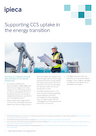
This fact sheet highlights the role of CCS in the energy transition, how the oil and gas industry can support uptake of CCS carbon capture and storage (CCS) technologies, some case studies from Ipieca members, and looking ahead at how Ipieca will support future progress.
This document outlines the key messages on BES good practices for the industry, and explores how industry and governments can support and work with each other to mainstream biodiversity across the energy transition.
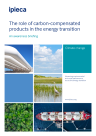
This briefing builds a shared understanding of carbon-compensated products, their role in supporting net-zero ambitions and the energy transition, and explores good practice in using them.

Following an introduction to Ipieca's new briefing on hydrogen, this webinar will invite guest panellists to explore the essential role hydrogen can play in supporting the decarbonization of hard-to-abate sectors and a low-carbon future, as well as share industry case studies and opportunities.
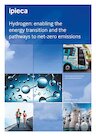
The latest paper in Ipieca's low-emissions pathways series provides an overview of hydrogen technology and areas of application, with a range of industry case studies.
During Ipieca Week 2025, stakeholders were invited to provide insights on how Ipieca can help put nature, people and climate at the heart of the energy transition, working towards an accelerated industry contribution to a sustainable world.
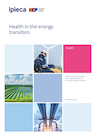
This joint Ipieca-IOGP awareness briefing explores what is currently known about the health risks associated with energy transition-focused technologies.
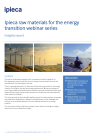
This 3-part webinar series aims to deepen understanding around the challenges and solutions to the increased demand for mining raw materials for the energy transition, particularly in wind and solar energy projects.
This report provides an overview of key messages from the two stakeholder panels exploring how Ipieca can support its members to lead the industry’s contribution to a sustainable energy transition, and how Ipieca can provide a trusted/safe channel for dialogue and collaboration with key stakeholders.
The report includes each speakers' insights on the technologies, actions and pathways required to achieve the energy transition and recommendations for how Ipieca, its members and the industry can accelerate their development.
Promotion and certification of sustainable biofuels is complex and requires a well coordinated, multi-faceted and credible approach, and includes compliance with government mandates, international standards and certification programmes, which will be instrumental in promoting the responsible production of sustainable biofuels. This guide provides an introduction to biofuels Chain of Custody (CoC) systems as well as providing information on the different types of CoC systems in use.
This fact sheet on provides a high-level overview of how companies in the oil and gas sector can define, assess and respond to water risks.
Ipieca has developed a new fact sheet on evaluating the opportunities and challenges of reusing produced water for the onshore oil and gas industry.
A fact sheet from a series developed by Ipieca and OGP to demonstrate the oil and gas industry's present and future contribution to sustainable development.

This webinar series explores current regulatory frameworks, implementation challenges and emerging priorities, with a particular focus on petroleum substances and UVCBs. Beginning with a global overview, it will be followed by regional sessions covering Latin America, South East Asia, Africa and the Middle East.

This webinar provides context and an overview of the Globally Harmonized System of Classification and Labelling of Chemicals, featuring the International Council of Chemical Associations and Shell.
SPE Gaia and SPE CCUS Technical Section, IOGP, OGCI and Ipieca, are hosting a webinar series sharing knowledge and good practice around the scaling up of CCS technology, including key issues, environmental responsibility, financial incentives, policy, and liability concerns.

This webinar focuses on the World Bank GFMR's 2026 Global gas flaring tracker report. It highlights recent updates to the tracker’s methodology, which aims to improve the accuracy and consistency of global gas flaring estimates, as well as an overview of the GFMR 2025 annual progress report.

Covering a range of topics on sustainable financing and derisking investments across the full value chain—from capture to transport and storage.

This webinar offers a range of perspectives around permitting to development for CCS, including but not limited to, topics such as experiences in permitting, discussions around social acceptance, long-term liability, jurisdictional differences and lessons learned.
Ipieca, in partnership with Arpel, ACP and AMEXHI, and supported by IOGP and OGDC, held a series of three webinars for the Latin American region focused on methane emissions.
Responding to the continuous advancement of technology, Ipieca, IOGP, OGCI, and the Energy Institute have released an update of this guidance and online tool to help operators select and deploy methane detection and quantification technologies.

This webinar focuses on the World Bank Global Flaring and Methane Reduction Partnership’s (GFMR) recently launched '2025 Global gas flaring tracker report', with special insights and key takeaways from our speakers.


