Ipieca’s industry leading good practice guidance and resources support oil, gas and alternative energy companies to advance their climate action, environmental responsibility, social performance and integrate sustainability across their operations and supply chains.
The filter below allows you to search for guidance and resources by theme, type, language and date as well as entering a search enquiry.
During Ipieca Week 2026, Ipieca stakeholders were invited to provide insights on the complex and interconnected development realities of Global South countries as they pursue economic and social progress while aiming to meet climate and nature goals.
During Ipieca Week 2025, stakeholders were invited to provide insights on how Ipieca can help put nature, people and climate at the heart of the energy transition, working towards an accelerated industry contribution to a sustainable world.
An update to the compendium, first published in 2020, is now available. It aims to support renewable energy developers to enhance the environmental and social performance of their projects and operations.
This report provides an overview of key messages from the two stakeholder panels exploring how Ipieca can support its members to lead the industry’s contribution to a sustainable energy transition, and how Ipieca can provide a trusted/safe channel for dialogue and collaboration with key stakeholders.
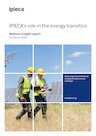
The report includes each speakers' insights on the technologies, actions and pathways required to achieve the energy transition and recommendations for how Ipieca, its members and the industry can accelerate their development.
This joint Ipieca-IOGP awareness briefing explores what is currently known about the health risks associated with energy transition-focused technologies.
This briefing builds a shared understanding of carbon-compensated products, their role in supporting net-zero ambitions and the energy transition, and explores good practice in using them.
The latest paper in Ipieca's low-emissions pathways series provides an overview of hydrogen technology and areas of application, with a range of industry case studies.
This fact sheet explores key aspects of biofuels and explains the role of biofuels in the energy transition, outlining the main biofuel types, feedstocks and production pathways, as well as where and how biofuels are used across transport and other sectors. It also describes how biofuel sustainability is assessed.
This fact sheet highlights the role of CCS in the energy transition, how the oil and gas industry can support uptake of CCS carbon capture and storage (CCS) technologies, some case studies from Ipieca members, and looking ahead at how Ipieca will support future progress.
This 3-part webinar series aims to deepen understanding around the challenges and solutions to the increased demand for mining raw materials for the energy transition, particularly in wind and solar energy projects.
This document outlines the key messages on BES good practices for the industry, and explores how industry and governments can support and work with each other to mainstream biodiversity across the energy transition.

Following an introduction to Ipieca's new briefing on hydrogen, this webinar will invite guest panellists to explore the essential role hydrogen can play in supporting the decarbonization of hard-to-abate sectors and a low-carbon future, as well as share industry case studies and opportunities.

The theme of this Annual Review reflects the strategic intent introduced in Ipieca’s 2025-2028 Strategy, which aims to accelerate action underpinned by collaboration
and shared understanding across the UN, business, finance and civil society.
The annual Ipieca sustainability reporting survey identifies trends in the sustainability reporting practices of Ipieca member companies. These are the results for 2025.
This second edition provides an updated overview of key concepts, definitions and priorities informing the just transition landscape.

This report presents a comprehensive synthesis of current concepts and methodologies for addressing the challenges of defining, implementing and measuring marine net positive impact (NPI).
This report evaluates existing circular economy measurement frameworks and identifies how a combination of frameworks enables better measurement of circular economy by oil and gas companies.

Health leading performance indicators data from Ipieca and IOGP members for 2024.
This is the fourth progress report, highlighting how Ipieca and its members are implementing the Ipieca-WBCSD SDG Roadmap.
The theme of the 2024 Annual Review is 'Putting climate, nature and people at the heart of the energy transition'. It reflects Ipieca’s broad sustainability mandate, which provides a platform for members and stakeholders to work on the interconnected areas of climate, nature and people across the industry for the energy transition.
This brochure provides context and information on the Ipieca Principles, their implementation and governance, and includes a toolkit of practical examples, useful resources and reference points to help members support the principles.

This resource provides definitions, and a summary of key tools and guidance produced by selected external stakeholders on responsible recruitment and proactive worker engagement. It is intended to be shared with energy companies’ suppliers, clients, and partners to promote the convergence of industry definitions and good practices on these two topics.

This interactive dashboard presents highlights from the latest Ipieca sustainability reporting survey, as well as analysis of all survey results since 2012, allowing for year-on-year comparisons which highlight reporting trends and changing priorities across the industry.

This interactive dashboard presents highlights from the latest Ipieca sustainability reporting survey, as well as analysis of all survey results since 2012, allowing for year-on-year comparisons which highlight reporting trends and changing priorities across the industry.

The annual Ipieca sustainability reporting survey identifies trends in the sustainability reporting practices of Ipieca member companies. These are the results for 2024.
Stakeholders play an important role in the development and implementation of Ipieca’s strategy. During Ipieca Week, input was sought from 19 stakeholders during 3 panels.

The Energy Local Content Map compiles key information pertaining to local content in the extractive industries, organized by country.

Health leading performance indicators data from Ipieca and IOGP members for 2023.
This is the third progress report, highlighting how Ipieca and its members are implementing the Ipieca-WBCSD SDG Roadmap.
For five decades, Ipieca has convened members and stakeholders to advance the industry’s environmental and social performance, supporting key United Nations conventions through operational good practice.

The brochure provides an overview of Ipieca, including our vision, the breadth of our activities, benefits of becoming a member, types of membership, current membership, and CEO testimonials.


