Ipieca’s industry leading good practice guidance and resources support oil, gas and alternative energy companies to advance their climate action, environmental responsibility, social performance and integrate sustainability across their operations and supply chains.
The filter below allows you to search for guidance and resources by theme, type, language and date as well as entering a search enquiry.

This report presents a comprehensive synthesis of current concepts and methodologies for addressing the challenges of defining, implementing and measuring marine net positive impact (NPI).
This Ipieca-IOGP guidance is designed to help HSE/SD professionals to develop biodiversity action plans (BAPs) for their activities and projects.
This document provides examples of how Ipieca companies are taking ambitious biodiversity actions which contribute towards the goals of the Global Biodiversity Framework.
The Ipieca-ICUN principles support energy companies and other stakeholders seeking to translate voluntary marine net positive impact ambition into credible, measurable and lasting gains for biodiversity and nature.
Angola LNG partners with the Wildlife Conservation Society while building a Liquefied Natural Gas (LNG) plant near the city of Soyo, Angola. Chevron case study.
This case study details the work of Maersk Oil Qatar to monitor and protect marine ecology at the Al Shaheen oil field
This guidance considers the effects of oil releases on fisheries, tourism and other commercial activities, and outlines available compensation schemes.
The publication is designed to provide guidance for stakeholders across the marine fuels and shipping industries, from fuel blenders and suppliers to end users.
Good practice guidelines for incident management and emergency response personnel. (Revision 2016)

This webinar provides an overview of the guidance, its key recommendations and practical applications for the energy and infrastructure sectors. Through real-world examples from pipeline infrastructure and nuclear decommissioning, speakers share lessons learned, barriers overcome and opportunities for delivering circular outcomes at scale.
This report from Ipieca-Energy Institute-CIRIA helps companies integrate circular economy principles into every stage of an asset’s life cycle. It provides practical guidance, tools and examples to support the transition from linear approaches to more circular, resource-efficient ways of designing, building, operating and decommissioning assets.
This report evaluates existing circular economy measurement frameworks and identifies how a combination of frameworks enables better measurement of circular economy by oil and gas companies.
This guidance clarifies currently used terminology in the water stewardship space and presents users with a streamlined water stewardship action scheme that synthesises water frameworks and disclosure standards for the energy sector.
This 3-part webinar series aims to deepen understanding around the challenges and solutions to the increased demand for mining raw materials for the energy transition, particularly in wind and solar energy projects.

The increasing global movement of people and goods elevates the risk of the introduction, spread, and establishment of invasive alien species (IAS), impacting biodiversity and businesses. This document provides guidance for prevention and management.

Ipieca and IOGP members share their companies' experiences in developing and utilising BAPs.
This document outlines the key messages on BES good practices for the industry, and explores how industry and governments can support and work with each other to mainstream biodiversity across the energy transition.
The Ipieca-OGCI Natural climate solutions: high carbon stock ecosystems management guidance supports the Paris Agreement goals by setting out the key principles to help energy companies conserve, enhance and restore the high carbon stock ecosystems where they operate.
A summary of the Ipieca-OGCI guidance on natural climate solutions management.
This document offers guidance for oil and gas industry JVs on the governance, policy development, implementation and management of HSSE&SR.
The second edition of the Water management framework reflects the lessons learnt from members and stakeholders in the years since its original publication.
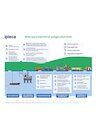
This infographic summarises the water and wastewater management uses in the oil and gas industry.
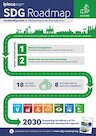
This infographic provides an overview of the impact opportunities related to the Nature theme, identified in 'Accelerating action: An SDG Roadmap for the oil and gas sector'.
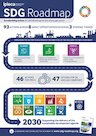
This infographic provides an overview of the priority SDGs and impact opportunities identified in the Roadmap, across the climate, nature and people themes.
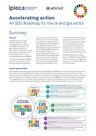
This summary provides an overview of the Roadmap's purpose, the impact opportunities where the sector can maximise its contributions to the Sustainable Development Goals (SDGs), and how the Roadmap can be implemented.
This joint Ipieca - UN Environment Programme World Conservation Monitoring Centre (UNEP-WCMC) report provides a summary of key drivers, challenges and opportunities for biodiversity and ecosystem services (BES) management in the oil and gas industry.
This fact sheet on provides a high-level overview of how companies in the oil and gas sector can define, assess and respond to water risks.
The second edition includes topics such as the relationship between environmental and social management, and the emergence of biodiversity and ecosystem services as a discipline.

Dr. Tidjani Niass of Saudi Aramco will introduce and propose the circular carbon economy as a pragmatic, alternative development model based on a more efficient use of natural resources.
Ipieca has developed a new fact sheet on evaluating the opportunities and challenges of reusing produced water for the onshore oil and gas industry.
The application of Globally Harmonized System (GHS) criteria to petroleum substances, has now been revised to include new research on the hazards of petroleum-related substances and constituents.
Ipieca has partnered with the United Nations Development Programme (UNDP) and the International Finance Corporation (IFC) to develop a shared understanding of the implications of the UN SDGs for the oil and gas industry and how the industry can most effectively contribute.


