Ipieca’s industry leading good practice guidance and resources support oil, gas and alternative energy companies to advance their climate action, environmental responsibility, social performance and integrate sustainability across their operations and supply chains.
The filter below allows you to search for guidance and resources by theme, type, language and date as well as entering a search enquiry.
On 2 November 2020, Ipieca held a virtual methane workshop. This report summarizes the presentations and discussions that took place during the workshop.
Ipieca held a workshop - Making CCS fly - that brought together more than 50 participants from across the oil and gas sector and expert communities to discuss the role, barriers and opportunities presented by CCS.
The Ipieca-organized workshop, held in Houston, Texas on 15-16 March 2016, brought together experts from academia, business, governments, and international and non-governmental organizations...

Natural gas can have an important role to play in a low-emissions future, with clear benefits when compared with other fossil fuels, particularly in terms of climate impact and air quality improvements, if methane emissions are controlled across the gas value chain.
This guidance clarifies currently used terminology in the water stewardship space and presents users with a streamlined water stewardship action scheme that synthesises water frameworks and disclosure standards for the energy sector.
The second edition of the Water management framework reflects the lessons learnt from members and stakeholders in the years since its original publication.
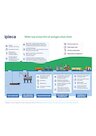
This infographic summarises the water and wastewater management uses in the oil and gas industry.
This fact sheet on provides a high-level overview of how companies in the oil and gas sector can define, assess and respond to water risks.
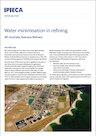
BP's Kwinana Refinery in Western Australia is located in an area that has experienced significant reduction in river flows.
This awareness briefing provides an overview of water management in the onshore development and production of oil and gas from shale.
Ipieca has developed a new fact sheet on evaluating the opportunities and challenges of reusing produced water for the onshore oil and gas industry.
Petroleum Development Oman (PDO) / Shell.
Oman -Since 2011, a third of produced water from the Nimr oil feed in Oman has been treated in a purposely built reed bed facility.
At Shell's Groundbirch venture, British Columbia, the local area is prone to water shortages. In order to minimise freshwater use, Shell and the City of Dawson Creek ...
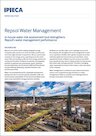
In-house water risk assessment tool strengthens Repsol's water management performance
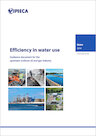
The guidance presents a systematic process for the onshore oil and gas industry to identify and assess potential measures to improve water efficiency via incorporating the principles of water stewardship, integrating water resource management
Statoil, an international energy company, expanding activities
within shale oil and gas in a sustainable manner
Shaping water management plans to meet local risks. Eni corporate worldwide oil and gas, petrochemical, refining and engineering operations.
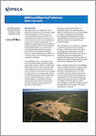
ConocoPhillips undertakes the first pilot of the tool at the Surmont 1 Oil Sands development in Canada.
This guide presents a systematic process for the onshore industry to select water sources that best meet project needs within the broader context of local or regional water management.
This manual describes typical 'best practices' and strategies used in petroleum refineries to manage water, including ways to reduce water usage. Improved water management in a petroleum refinery can potentially reduce the volume and cost of raw water used in refinery operations. Furthermore, improved water management may result in reductions in wastewater flow or contaminant load or both. Lower flow and contaminant load may result in lower wastewater treatment operating and maintenance costs. Optimized water management may also reduce the mass of contaminants in the treated effluent, thus improving the quality of a wastewater discharge and ultimately the environmental impact of a refinery's discharge.

This industry-specific document provides guidance on the prevention of food- and water-related diseases.
Good practice guidelines for incident management and emergency response personnel.
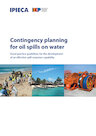
Oil spill contingency planning is the process of developing a suitable spill response capability that is in compliance with the local regulatory framework and commensurate with the oil spill risks of an organization or facility. (Revision 2016)
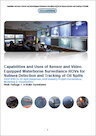
This report provides a summary and analysis of the current ROV fleet...

Ipieca hosted a two-day workshop to convene the industry and its key stakeholders with the aim of building consensus and enhancing understanding of the importance, challenges and opportunities of carbon offsets as part of a broader carbon mitigation strategy.

The report highlights some of the opportunities and challenges to decarbonize the transport sector, the importance of reducing emissions from agriculture and land use ...
The report explores some of the major themes impacting the SLCFs discussion, and aims to: Identify and understand the effects on warming, precipitation, and air ...
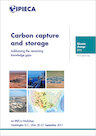
Widespread deployment of carbon capture and storage (CCS) requires addressing remaining knowledge gaps and implementation barriers. Resolving these involves a portfolio of activities including research and development, demonstration projects, and developing
"Greenhouse gas emissions reporting: Perspectives on voluntary and regulatory regimes" provides a summary of the themes heard at the 2011 Ipieca workshop. It is aimed at everyone who has an interest in greenhouse gas reporting and the requirements it places on companies.
The effectiveness and efficiency of regulatory and other policy approaches intended to reduce the greenhouse gas emissions from transportation fuels can hinge on the fuel life-cycle analysis (LCA). This report provides a summary of the workshop of the same name, convened in September 2010
International cooperation will be critical if society is to efficiently manage the risks posed by global climate change. This workshop considered the future of international policy architectures to manage climate change risk.
The goal of this workshop was to advance understanding of the role of CO2 capture and geological storage, and strategies to improve its performance and prospects. This booklet summarizes the discussions and presentations made at the workshop.


