Ipieca’s industry leading good practice guidance and resources support oil, gas and alternative energy companies to advance their climate action, environmental responsibility, social performance and integrate sustainability across their operations and supply chains.
The filter below allows you to search for guidance and resources by theme, type, language and date as well as entering a search enquiry.
This fact sheet explores key aspects of biofuels and explains the role of biofuels in the energy transition, outlining the main biofuel types, feedstocks and production pathways, as well as where and how biofuels are used across transport and other sectors. It also describes how biofuel sustainability is assessed.
This fact sheet highlights the role of CCS in the energy transition, how the oil and gas industry can support uptake of CCS carbon capture and storage (CCS) technologies, some case studies from Ipieca members, and looking ahead at how Ipieca will support future progress.
Ipieca works closely to support IMO work to decarbonise the maritime industry, providing technical expertise across a range of areas to identify good practices and develop industry guidance.
As we transition to a more sustainable future, alternative fuels and their associated products are becoming more prevalent in production, manufacturing and use. Their safe handling and prevention of spills is a priority.
This new fact sheet explores the scale-up and deployment of CCS in more detail and presents a series of facts about the necessary development of this technology.
 Carbon Capture and Storage: A key technology for delivering a low-emissions world (The Paris Puzzle)
Carbon capture and storage: A key technology for delivering a low-emissions world is one piece of the Paris Puzzle...
Effective policy: The driver of results is one piece of the Paris Puzzle - a series of papers intended to address what we see as key components...
Managing our emissions: Energy conservation and beyond is one piece of the Paris Puzzle - a series of papers intended to address what we see as key components
Meeting energy needs: The unique role of oil and gas is one piece of the Paris Puzzle - a series of papers intended to address...
The Paris Puzzle: The Pathway to a low-emissions future lays out our global membership view on the challenges the world faces in transitioning to a low-greenhouse gas emissions future.
Published in the run up to COP21 in Paris, this series of papers was intended to address what Ipieca sees as key components of efforts to address climate change and demonstrate our commitment to meeting the challenge.
Natural gas: Into the future is one piece of the Paris Puzzle - a series of papers intended to address what we see as key components of efforts to address climate change...
While a significant amount of attention surrounding climate change has focused on carbon dioxide (CO2) emissions, there is growing interest in the role of methane (CH4) and other short-lived climate forcers.
Over the past year, the concepts of 'unburnable carbon', 'stranded assets' and a 'carbon bubble' have been promoted by a number of groups, gaining the attention of investors, academics and the media.
A fact sheet from a series developed by Ipieca and OGP to demonstrate the oil and gas industry's present and future contribution to sustainable development.

A fact sheet from a series developed by Ipieca and OGP to demonstrate the oil and gas industry's present and future contribution to sustainable development.

This webinar provides an overview of the guidance, its key recommendations and practical applications for the energy and infrastructure sectors. Through real-world examples from pipeline infrastructure and nuclear decommissioning, speakers share lessons learned, barriers overcome and opportunities for delivering circular outcomes at scale.

This report from Ipieca-Energy Institute-CIRIA helps companies integrate circular economy principles into every stage of an asset’s life cycle. It provides practical guidance, tools and examples to support the transition from linear approaches to more circular, resource-efficient ways of designing, building, operating and decommissioning assets.

This report presents a comprehensive synthesis of current concepts and methodologies for addressing the challenges of defining, implementing and measuring marine net positive impact (NPI).
This report evaluates existing circular economy measurement frameworks and identifies how a combination of frameworks enables better measurement of circular economy by oil and gas companies.
This guidance clarifies currently used terminology in the water stewardship space and presents users with a streamlined water stewardship action scheme that synthesises water frameworks and disclosure standards for the energy sector.
This document provides examples of how Ipieca companies are taking ambitious biodiversity actions which contribute towards the goals of the Global Biodiversity Framework.
This 3-part webinar series aims to deepen understanding around the challenges and solutions to the increased demand for mining raw materials for the energy transition, particularly in wind and solar energy projects.

The increasing global movement of people and goods elevates the risk of the introduction, spread, and establishment of invasive alien species (IAS), impacting biodiversity and businesses. This document provides guidance for prevention and management.

Ipieca and IOGP members share their companies' experiences in developing and utilising BAPs.
This Ipieca-IOGP guidance is designed to help HSE/SD professionals to develop biodiversity action plans (BAPs) for their activities and projects.
This document outlines the key messages on BES good practices for the industry, and explores how industry and governments can support and work with each other to mainstream biodiversity across the energy transition.

The Ipieca-OGCI Natural climate solutions: high carbon stock ecosystems management guidance supports the Paris Agreement goals by setting out the key principles to help energy companies conserve, enhance and restore the high carbon stock ecosystems where they operate.
A summary of the Ipieca-OGCI guidance on natural climate solutions management.
This document offers guidance for oil and gas industry JVs on the governance, policy development, implementation and management of HSSE&SR.
The second edition of the Water management framework reflects the lessons learnt from members and stakeholders in the years since its original publication.
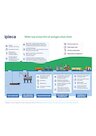
This infographic summarises the water and wastewater management uses in the oil and gas industry.


