Ipieca’s industry leading good practice guidance and resources support oil, gas and alternative energy companies to advance their climate action, environmental responsibility, social performance and integrate sustainability across their operations and supply chains.
The filter below allows you to search for guidance and resources by theme, type, language and date as well as entering a search enquiry.
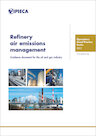
This document describes 'good practices' and strategies that can be used in petroleum refineries to manage emissions of air pollutants, and includes a special section on how to identify odour sources. Many of the techniques may also be applicable to those chemical plants and petroleum distribution facilities having similar equipment and operations.
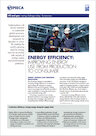
A fact sheet from a series developed by Ipieca and OGP to demonstrate the oil and gas industry's present and future contribution to sustainable development.
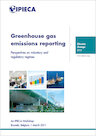
"Greenhouse gas emissions reporting: Perspectives on voluntary and regulatory regimes" provides a summary of the themes heard at the 2011 Ipieca workshop. It is aimed at everyone who has an interest in greenhouse gas reporting and the requirements it places on companies.
This publication draws on the experience and expertise of the industry, through Ipieca and OGP, and the World Bank-led Global Gas Flaring Reduction Public-Private partnership (GGFR).
The effectiveness and efficiency of regulatory and other policy approaches intended to reduce the greenhouse gas emissions from transportation fuels can hinge on the fuel life-cycle analysis (LCA). This report provides a summary of the workshop of the same name, convened in September 2010
A compare-and-contrast analysis of public studies
Recognizing the need to update the original version of the Guidelines to reflect changing practices, Ipieca and API jointly initiated the development of this second edition of the Guidelines to continue to promote credible
Promotion and certification of sustainable biofuels is complex and requires a well coordinated, multi-faceted and credible approach, and includes compliance with government mandates, international standards and certification programmes, which will be instrumental in promoting the responsible production of sustainable biofuels. This guide provides an introduction to biofuels Chain of Custody (CoC) systems as well as providing information on the different types of CoC systems in use.
The uncertainties inherent in the data used for emission inventories help inform and improve understanding for the data's use. This is receiving increased attention in order to understand determinations of GHG emissions and emission reductions. This document provides background information, and details, on measurement uncertainty and statistical calculation methods that improve the quality of GHG emission estimations for the oil and gas industry. It is a collaborative effort between Ipieca, the American Petroleum Institute (API) and CONCAWE.