Ipieca’s industry leading good practice guidance and resources support oil, gas and alternative energy companies to advance their climate action, environmental responsibility, social performance and integrate sustainability across their operations and supply chains.
The filter below allows you to search for guidance and resources by theme, type, language and date as well as entering a search enquiry.

This webinar series explores current regulatory frameworks, implementation challenges and emerging priorities, with a particular focus on petroleum substances and UVCBs. Beginning with a global overview, it will be followed by regional sessions covering Latin America, South East Asia, Africa and the Middle East.

This webinar provides context and an overview of the Globally Harmonized System of Classification and Labelling of Chemicals, featuring the International Council of Chemical Associations and Shell.
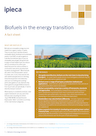
This fact sheet explores key aspects of biofuels and explains the role of biofuels in the energy transition, outlining the main biofuel types, feedstocks and production pathways, as well as where and how biofuels are used across transport and other sectors. It also describes how biofuel sustainability is assessed.
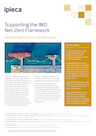
Ipieca works closely to support IMO work to decarbonise the maritime industry, providing technical expertise across a range of areas to identify good practices and develop industry guidance.
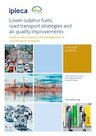
Ipieca has released updated guidance on lower-sulphur fuels, managing road transport emissions and improving air quality.
Ipieca has released updated guidance on lower-sulphur fuels, managing road transport emissions and improving air quality. Find the executive summary here.
The publication is designed to provide guidance for stakeholders across the marine fuels and shipping industries, from fuel blenders and suppliers to end users.
Optimized, effective waste management is integral to petroleum refinery operations. It helps minimize risk to both people and the environment, enhances resource utilization, and reduces costs.
This document describes 'good practices' and strategies that can be used in petroleum refineries to manage emissions of air pollutants, and includes a special section on how to identify odour sources. Many of the techniques may also be applicable to those chemical plants and petroleum distribution facilities having similar equipment and operations.
Title Type Theme Published Download 
Webinar series: Globally Harmonized System Webinar Climate 17 Sep 2026 
Global overview of GHS Webinar Climate 17 Sep 2026 
Biofuels in the energy transition Fact sheet Climate 10 Apr 2026 
Supporting the IMO Net-Zero Framework: decarbonisation of the maritime sector Fact sheet Climate 12 Jun 2025 
Lower-sulphur fuels, road transport strategies and air quality improvements Good practice guidance Climate 01 Feb 2020 
Lower-sulphur fuels, road transport strategies and air quality improvements (Executive summary) Good practice guidance Climate 01 Feb 2020 
Joint Industry Guidance on the supply and use of 0.50%-sulphur marine fuel Good practice guidance Climate 20 Aug 2019 
Petroleum refinery waste management and minimization Good practice guidance Climate 23 Sep 2014 
Refinery air emissions management Good practice guidance Climate 27 Jun 2012 
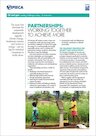
Partnerships: working together to achieve more. Fact sheet Climate, Nature, People, Marine spill preparedness and response, Corporate 28 Apr 2012