Ipieca’s industry leading good practice guidance and resources support oil, gas and alternative energy companies to advance their climate action, environmental responsibility, social performance and integrate sustainability across their operations and supply chains.
The filter below allows you to search for guidance and resources by theme, type, language and date as well as entering a search enquiry.
This report provides an assessment of satellite surveillance for oil spill response and focuses on identifying capabilities and gaps associated with surveillance monitoring from satellites. The report focuses on the surveillance capabilities of satellites, considering both the intrinsic capabilities and the practical and operational capabilities of sensors
The Oil Spill Industry Project (JIP) technical report (Revision 2016)
This report evaluates a range of oil detection sensors and oceanographic vehicles and their overall compatibility for detecting and tracking oil in water. Oil detection sensors include in situ contact sensors that utilize either direct or indirect sensing methods and surface remote sensors that utilize either passive or active sensing methods. Oceanographic vehicles include autonomous underwater vehicles (AUVs), autonomous surface vehicles (ASVs), and manned surface vessels.
This product has been developed in partnership with UNEP-World Conservation Monitoring Centre (WCMC) and provides short definitions of over 200 commonly-used biodiversity terms and acronyms. The glossary was developed to support greater consistency in the use of terms and definitions related to biodiversity. The definitions have been
Ipieca is partnering with ICMM, the international Council on Mining & Metals and The Equator Principle Association in a Cross-Sector Biodiversity Initiative (CSBI). This forum is enabling cross-industry learning on the use of the biodiversity mitigation hierarchy, and the application of biodiversity offsets.
As responses to climate change impacts extend beyond greenhouse gas (GHG) emissions mitigation, governments and companies increasingly recognize the need to integrate adaptation planning and implementation into balanced risk management strategies
The Oil Spill Industry Project (JIP) technical report (Revision 2016)
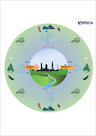
This product highlights the interface between the management of biodiversity and ecosystem services (BES) and water issues throughout upstream onshore oil and gas operations, and outlines the key management steps for identifying and assessing both dependencies and potential impacts of operations on BES, and water risks
Natural gas is experiencing a period of strong growth. Significantly increased resource estimates, and improvements in production and transport technologies have led to an expanding role in energy supply
The Oil Spill Joint Industry Project (JIP) technical report (Revision 2016)


